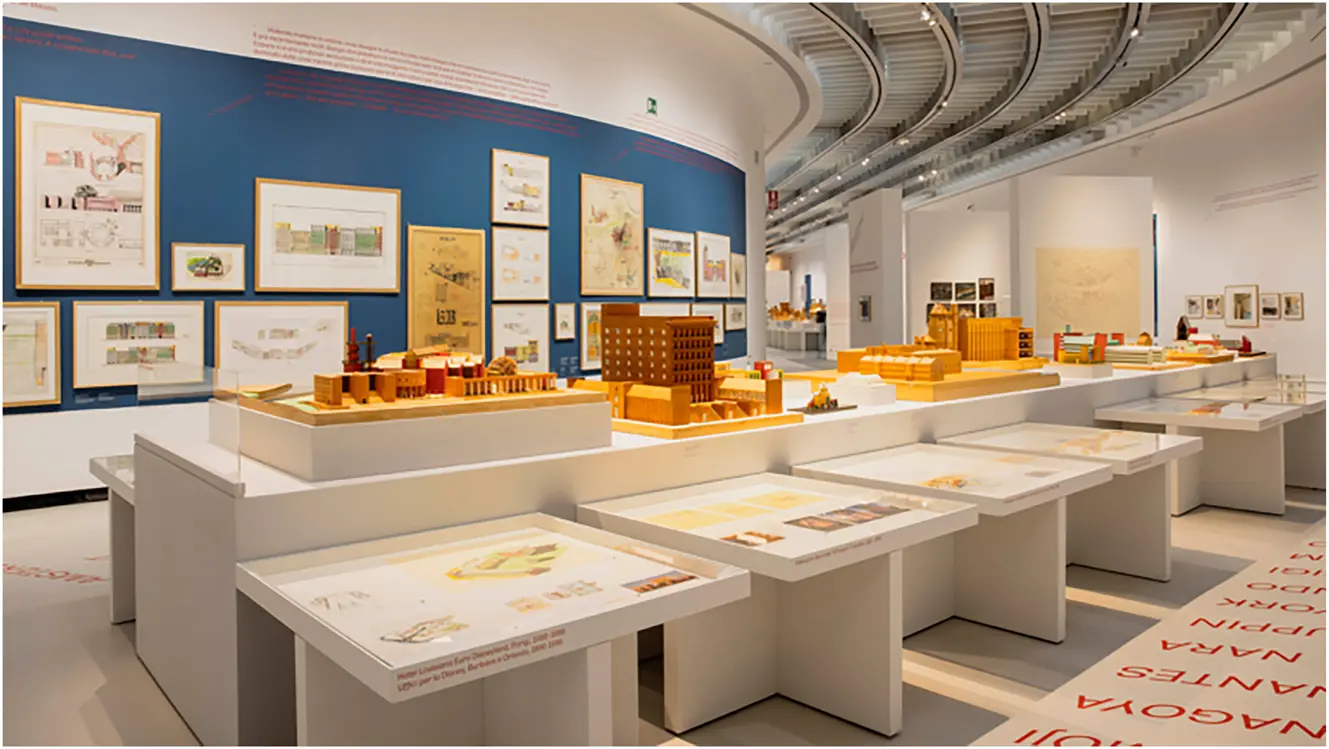
This article offers a theoretical reflection grounded in curatorial analysis and supported by a case study. It examines how Aldo Rossi’s legacy is redefined through archives, exhibitions, and installations, with a focus on the transformations of his Analogous City. Drawing on scholarly concepts from Paul Ricœur, Bruno Latour, and Umberto Eco, the article considers how memory, mediation, and interpretation work together as a process of meaning-making in cultural heritage. It shows how this process shapes the ways Rossi’s work is preserved and reimagined across different forms of display. Rather than treating cultural heritage as static, the article presents it as a process formed through editorial choices, curatorial practices, and participatory engagement. Rossi’s case study shows how architectural memory can remain open and responsive, especially when activated through digital and spatial forms of display.