Curatorial A(i)gents: Experimenting AI and Curatorship at the Harvard Art Museums
Rodighiero, Dario, Jeffrey Schnapp, Annette Jael Lehmann, Kim Albrecht, Lins Derry, and Sarah Newman. Forthcoming. “Curatorial A(i)gents: Experimenting AI and Curatorship at the Harvard Art Museums.” Journal of Curatorial Studies.
This article offers a reflection on Curatorial A(i)gents, an exhibition conceived by metaLAB and held in the Harvard Art Museums’ Lightbox Gallery from March to May 2022. Working with the museums’ digital collection of more than 230,000 objects, metaLAB members and collaborators produced eleven installations, shown on weekly rotation and accompanied by four public panel discussions. The installations used artificial intelligence to combine human and machine views of the archive. Read together, they form a curatorial reflection on what agency becomes when algorithms mediate the encounter with a collection, and on what it means to train visitors to “see otherwise.”
Introduction
This article is a reflection on Curatorial A(i)gents, an exhibition in which metaLAB handed algorithms a share of curatorial agency. When artificial intelligence enters knowledge institutions, what is at stake is the authority to decide what a collection shows and how it can be seen. David Joselit, professor of Art, Film, and Visual Studies at Harvard University, describes museums as theatres of vision where visitors use the exhibition space as an instrument to connect with archival collections. He describes how in the gap between museums and archives, curators turn artworks into eternal objects that are preserved in their original state even when their origin turns out to be a myth. The bust of Nefertiti is one such object, held as a timeless icon despite unresolved debates over its provenance.
That premise underpins Curatorial A(i)gents, an exhibition developed at the Harvard Art Museums (HAM) by metaLAB, a research group in the networked arts and humanities based in Cambridge, Berlin, and Basel (metaLAB 2022b). Curatorial agency here was coordinated by metaLAB and then delegated to its members and collaborators, who carried it through a shared design process that resulted in eleven digital installations. What the exhibition practised is therefore collective curatorship combined with project-based authorship: a top-down frame and a bottom-up making that shaped each other reciprocally. The account that follows is written from inside that process.
The exhibition’s concept was first articulated in a pamphlet setting out what it might mean to grant an algorithm a share of curatorial agency (Maizels and Qiu 2020). Joselit contributed a short essay (2020) reflecting on digital curatorship, examining data as new kinds of eternal objects that enter museums to enable new narratives. Once data can serve as the object of reference — as in AI-generated restorations of fragmentary artworks — the institution that holds it starts thinking differently. Today, museums can be seen as institutional machines capable of processing their objects as data, relying on a complementary digital infrastructure to support new forms of curatorial practice.
Curatorial A(i)gents was born when data settled in cultural institutions, and curators began to take care of objects through digital technologies (Thiel and Bernhardt 2023). The process of datafication pervading society (Van Dijck 2014) makes no exception for museums, which increasingly rely on data to catalogue, present, and interpret their collections (Rodighiero et al. 2026). Cultural organizations such as HAM are nowadays actively shaped by this transformation, integrating computational tools into curatorial practice.
Harvard Art Museums
HAM derives from the union of three museums at Harvard University — Fogg, Busch-Reisinger, and Arthur M. Sackler — and over the past decade has expanded well beyond its 1895 origins (Cuno 1996). Growth of this kind is part of why museums have invested heavily in digitizing their collections, attaching metadata to physical objects. As collections expand, traditional cataloguing methods become insufficient, making digital infrastructures (Ross et al. 2024) essential for enhancing accessibility to vast repositories. Today, HAM’s collection comprises over 230,000 digital items, enriched by more than ten million annotations and hundreds of thousands of images, all accessible through IIIF — the International Image Interoperability Framework (Harvard University 2019). Such a framework has the capacity to make digital collections accessible outside museums, allowing the public to browse art objects or the experts to embed images into applications (Rodighiero et al. 2023).
Jeff Steward, Director of Digital Infrastructure and Emerging Technology at HAM, describes how digital tests began there in 2014 (Steward 2020). Computer vision techniques (Azar, Cox, and Impett 2021) were applied to 75,000 photographs, generating descriptions of their content along with a list of the elements identified in each image — from colour analysis to face detection. Thus, through IIIF and Artificial Intelligence (AI), the museums’ objects were digitally extended to perform research differently or establish new connections between items. The positive response to this experiment led to the adoption of five computer vision services, paving the way for further digital initiatives. Among them, the Curatorial A(i)gents exhibition emerged as an exploration of AI-driven curatorship, showcasing how technology could transform museum experience and collection interpretation.
Reimagining Curatorship through AI
The concept of Curatorial A(i)gents rests on the idea that metadata can enable new forms of curatorship by complementing human views with artificial ones. Built on the HAM digital collection, it was conceived as a speculative test of what AI curatorship might look like. Here data opened perspectives on the collection that the traditional curatorial practice alone leaves out of view.
Among the initiators of this exhibition, metaLAB Founder Jeffrey Schnapp suggested looking at artificial intelligence as an independent emissary between curators and their collections, or as a partial autonomous agent that augments curatorial capability by expanding the ways in which artworks can be seen (Schnapp 2020). What can be referred to as AI agents can extend human capacities by relying on data and algorithms, offering fresh perspectives to both curators and visitors. In mediating between curators and collections, such agents invite both critical speculation and creative use of technology in archival domains.
This approach adopts a philosophical view of artificial intelligence rooted in Alan Turing’s hypothesis (1950) that computers would require specific abilities to be considered intelligent. These abilities today include natural language processing, knowledge representation, automated reasoning, and machine learning (Russell and Norvig 2016, 2), providing new avenues to explore AI’s role in interpreting and presenting collections. By merging AI’s analytical power with curatorial insight, the exhibition invites to rethink curatorship, and with it how museum archives are understood and experienced.
Theoretical Debates and Critical View
The integration of artificial intelligence in museums raises fundamental questions about the role of automation in curatorial practice and the epistemological shifts it introduces. While AI is often regarded as a transformative force in museum practices, scholars warn against a growing tendency to treat it as a universal solution. Museums, as knowledge institutions, do not merely adopt technological developments; they shape them. Three debates follow: technological solutionism, algorithmic bias, and curatorial agency.
Technological solutionism is the first debate: the risk of treating AI as a technological fix without addressing its broader impact on museum practices. Digitization and AI tools are often framed as progressive steps towards accessibility and efficiency, a framing that overlooks the epistemological and institutional consequences of AI adoption. AI does not offer neutral solutions but shapes the ways in which museums function, influencing what is prioritized, categorized, and made visible (Huang and Liem 2022; Schaerf et al. 2023). A critical approach is therefore necessary to interrogate whether AI-driven museum practices reinforce existing power structures or genuinely introduce new modes of interpretation.
Algorithmic bias is the second debate: what AI systems inherit, and the ethical challenges this poses for museum collections. As Ruha Benjamin (2019) and Kate Crawford (2021) have argued, AI inherits the biases present in its training data, often amplifying historical inequalities rather than mitigating them. In the museum context, this manifests in algorithmic classifications that reproduce Eurocentric taxonomies, reinforce colonial hierarchies, or obscure marginalized histories. The challenge for museums is to develop transparent, accountable practices that engage critically with their datasets. Without such measures, AI risks perpetuating the very exclusions that cultural institutions are increasingly seeking to address.
Curatorial agency is the third debate: the part AI should play in curatorial decision-making. Should AI be considered an extension of curatorial expertise, or does it introduce a form of autonomous agency that shifts the nature of museum work? Some scholars argue that AI can function as a co-curator, assisting human experts in identifying patterns, connections, and thematic links that may not be immediately apparent. However, others caution against an over-reliance on automation, warning that AI-driven curatorial processes may inadvertently deskill museum professionals by reducing complex interpretive work to algorithmic outputs (Thiel and Bernhardt 2023).
Rather than treating AI as an autonomous curator, Curatorial A(i)gents engages with these debates by positioning AI as both a subject of inquiry and a tool for experimentation. It thus contributes to a broader discussion on how museums should integrate AI — not as an unquestioned innovation but as a system requiring scrutiny, ethical consideration, and curatorial intervention.
Pamphlet’s Combinatory Views
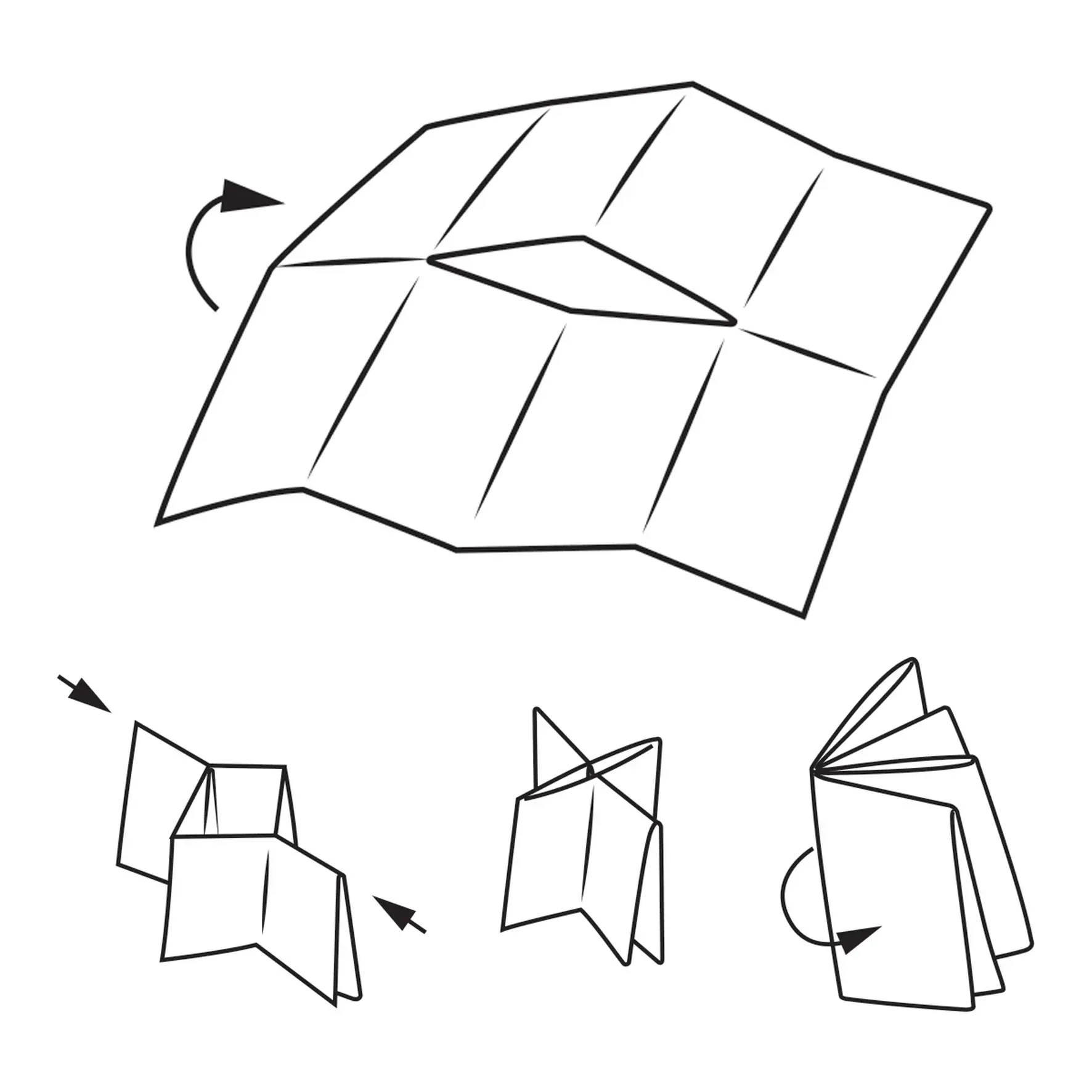
These debates took printed form before they took spatial form, in the pamphlet that accompanied the exhibition. Edited by Mike Maizels and designed by Chelsea Qiu (2020), it gathers the reflections discussed above by Joselit, Steward, and Schnapp in a foldable layout that enables experimental combinatory reading (see Figure 1). This unique format encourages an interactive engagement by exploring connections between project descriptions and guest essays. As described by Qiu, the medium “seeks to serve as a physical artifact with an open-ended form and function” (Maizels and Qiu 2020). Qiu also created a recording showcasing the pamphlet’s combinatory use, available for viewing on Vimeo (Qiu 2020).
The pamphlet features five further essays. Matthew Battles reflects on museums as data-rich environments, emphasizing the potential of machine learning to unlock new narratives; Shannon Mattern addresses critical information literacy and the need for institutions to use technology ethically; Wendy Chun critiques the biases embedded in machine learning, calling for an “unlearning” of technological practices; Sarah Newman examines digital access to collections and the new perspectives it offers; and Tim Schneider turns machine learning towards institutional critique, using it to expose biases and argue for more inclusive practices (Maizels and Qiu 2020).
Lightbox Gallery Experimental Venue
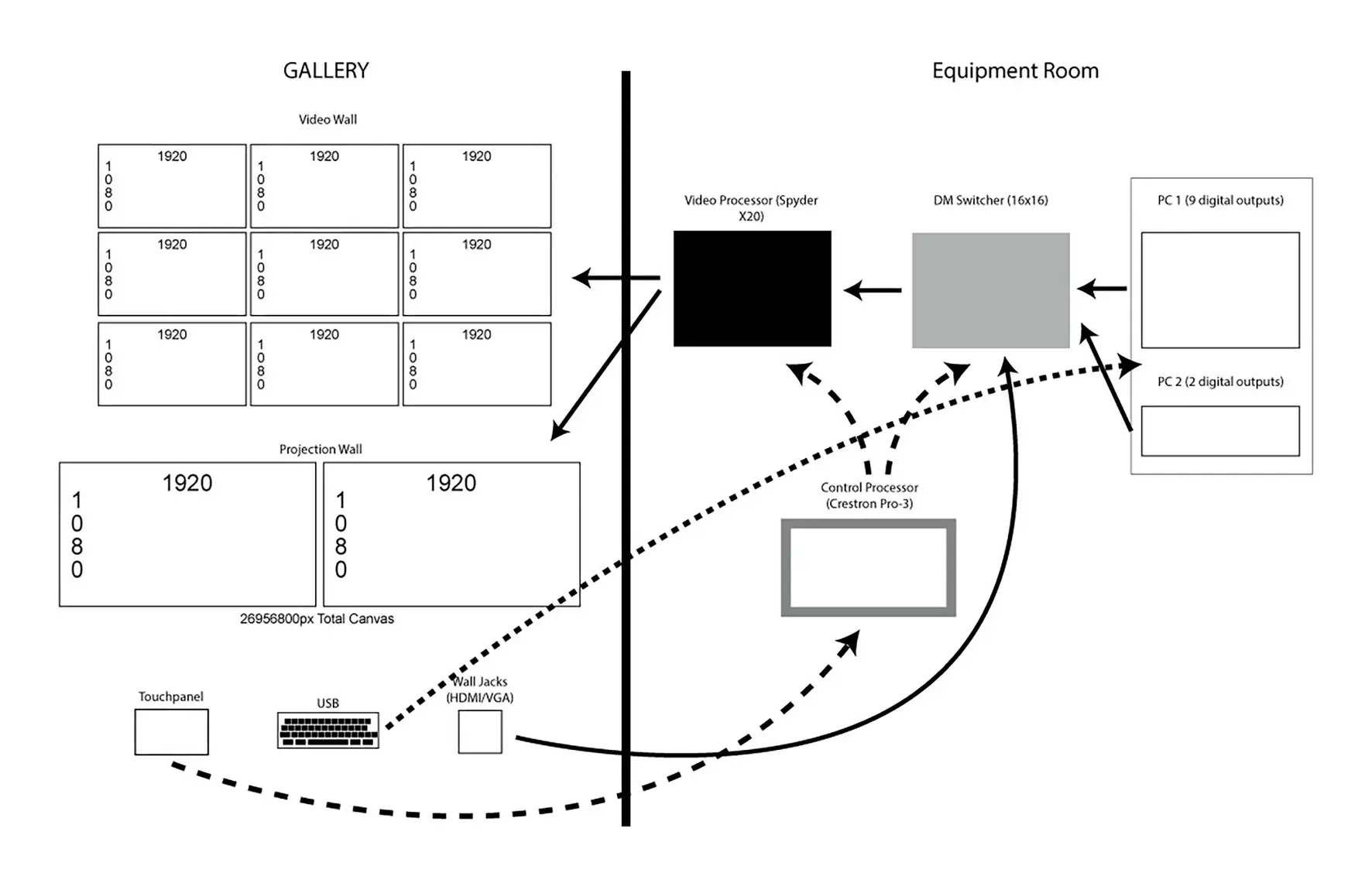
After being delayed for two years due to the pandemic crisis, Curatorial A(i)gents opened at the Harvard Art Museums in March 2022 and ran until May, housed in the Lightbox Gallery, a physical space on the top floor that provides visitors with access to museums’ digital archives. The gallery takes its name from the light itself, which enters generously through the glass rooftop above it. Its media system comprises a large video wall of nine synchronized screens that dominates the space (see Figure 2), various input devices, and a projection wall on the opposite side (see Figure 3). The video wall not only defined the gallery’s visual identity but also posed the primary design constraint for the exhibition. Each of Curatorial A(i)gents’ digital installations had to be adapted to fit the space while ensuring seamless interaction with HAM’s archival dataset.
![Figure 2. A three-dimensional representation of the Lightbox Gallery at the Harvard Art Museums. It works as an exhibition space connecting the museums to their archives. At its core, a video wall composed of nine monitors is used to exhibit digital installations, including the ones from Curatorial A(i)gents. Photo: courtesy of Ming Tu and Jeff Steward ([2016] 2024).](/images/curatorial-a-i-gents-experimenting-ai-and-curatorship-at-the-harvard-art-museums/fig_002.webp)
Eleven Digital Installations
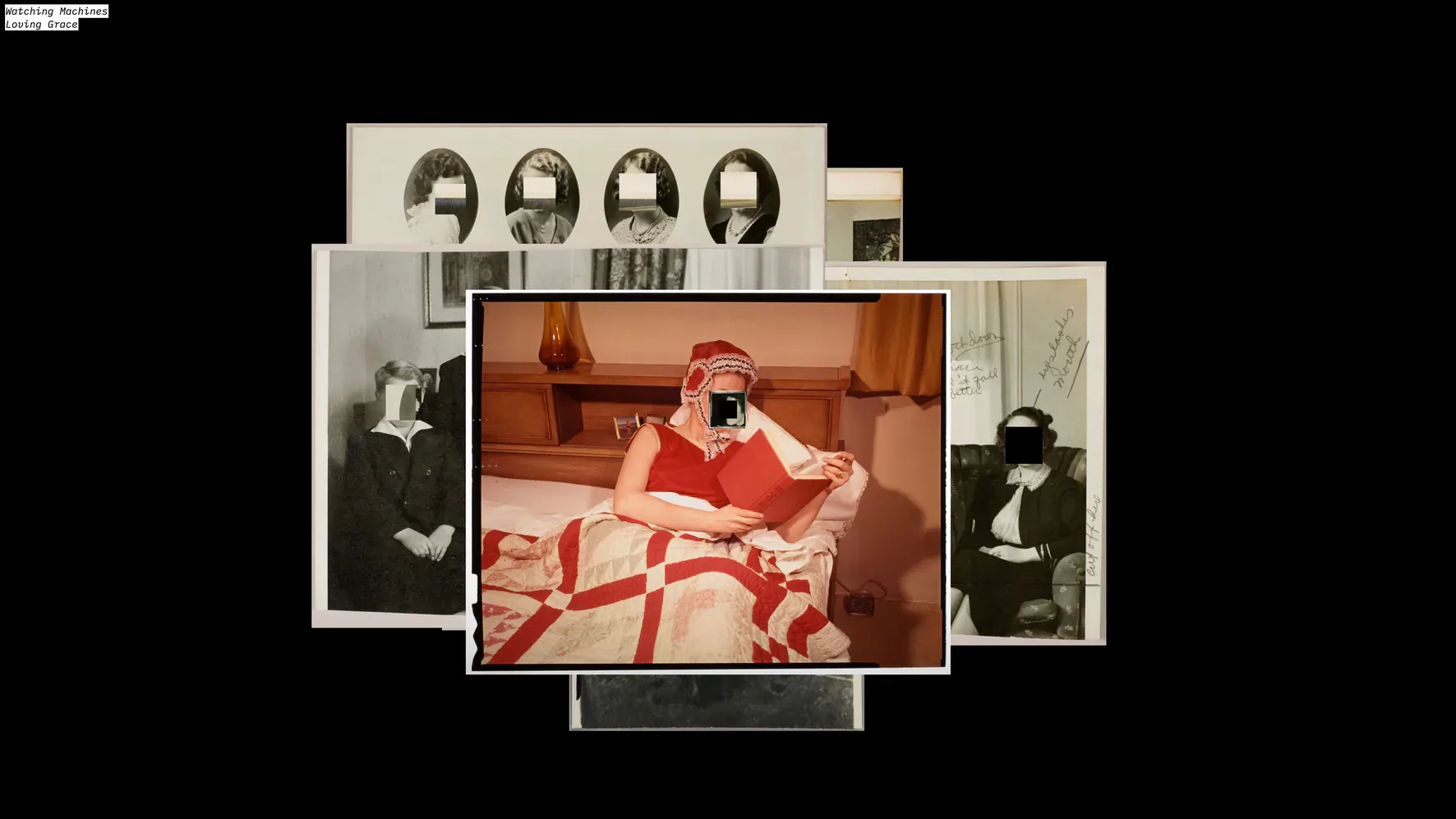
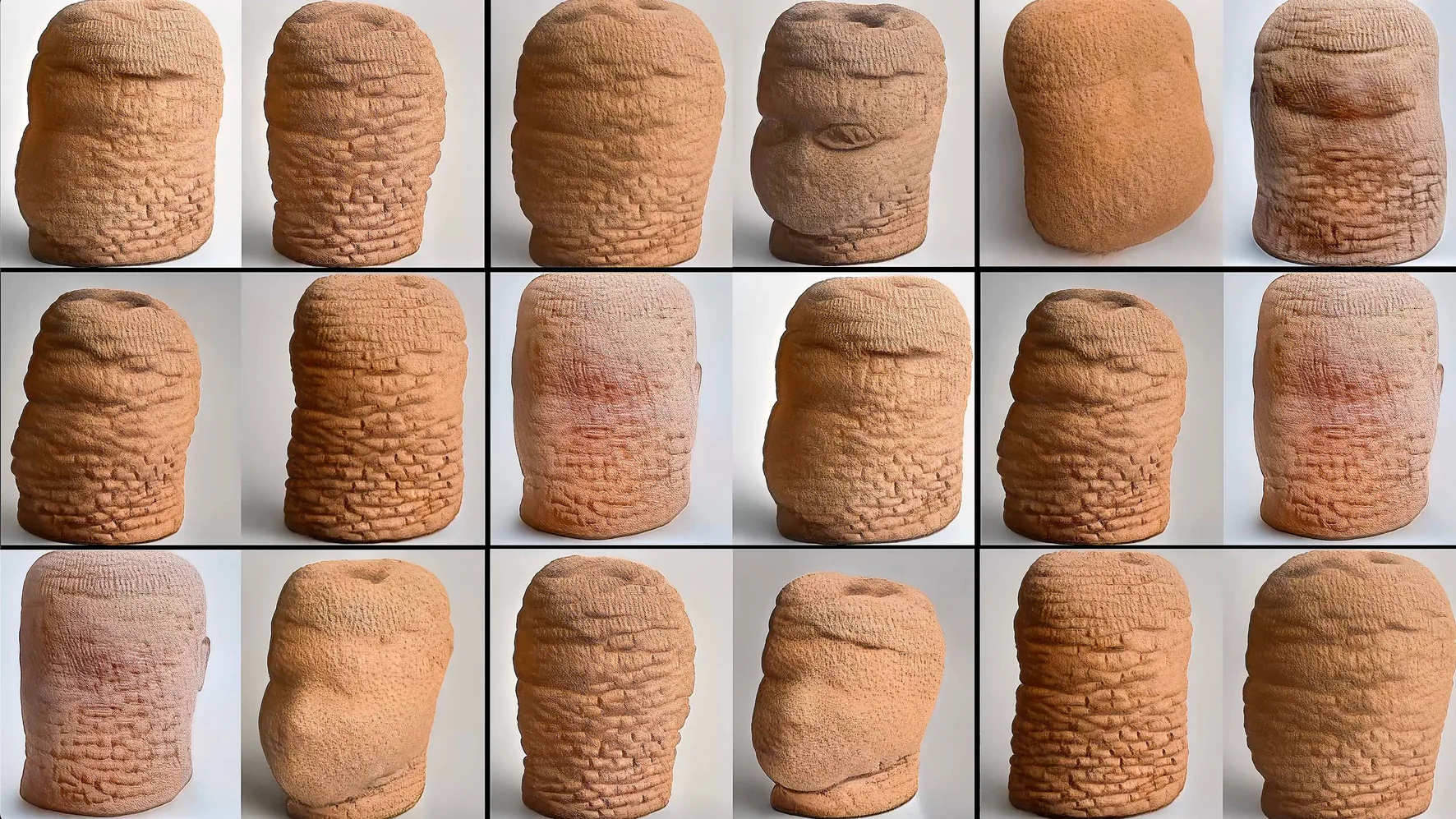
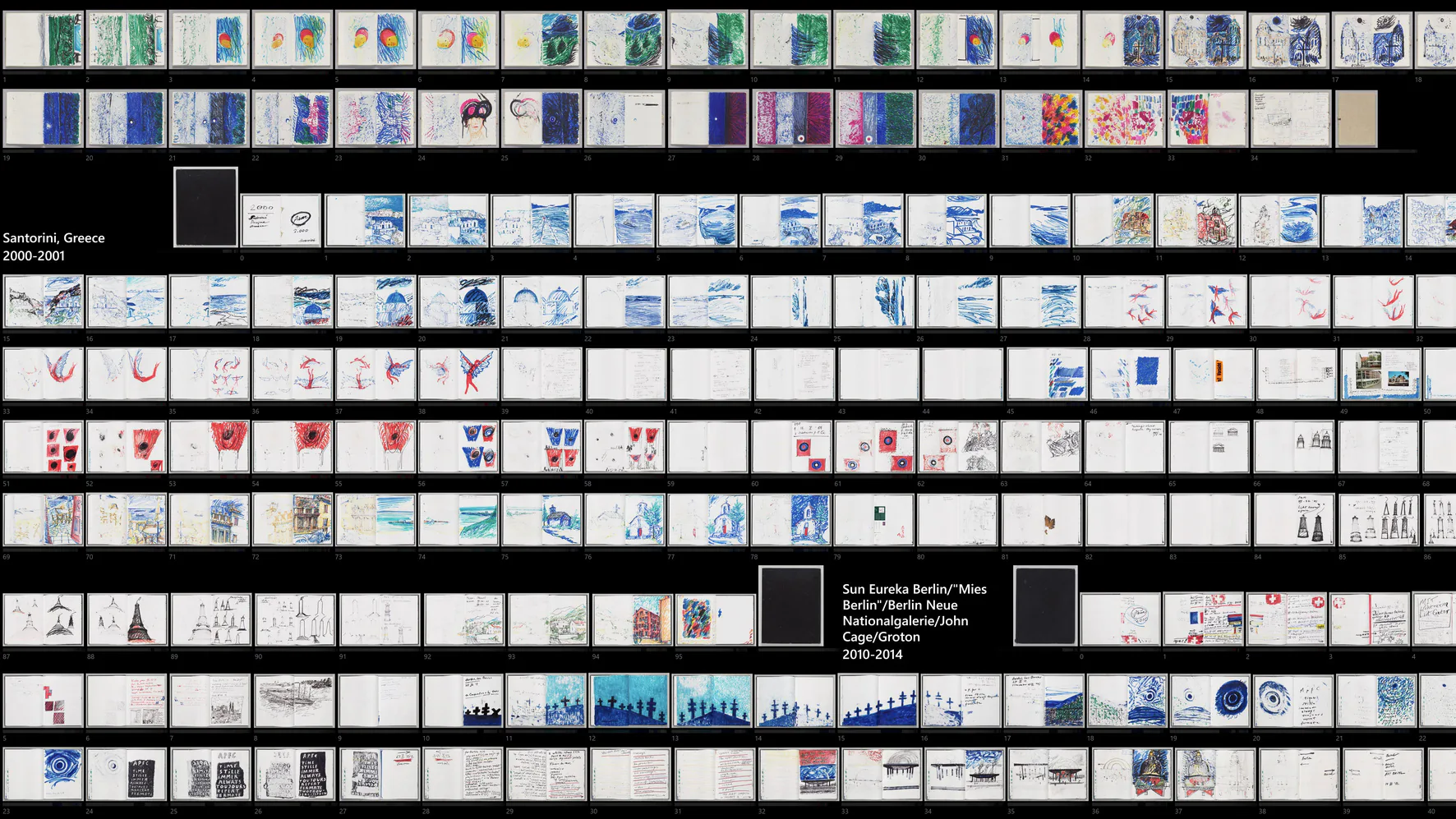
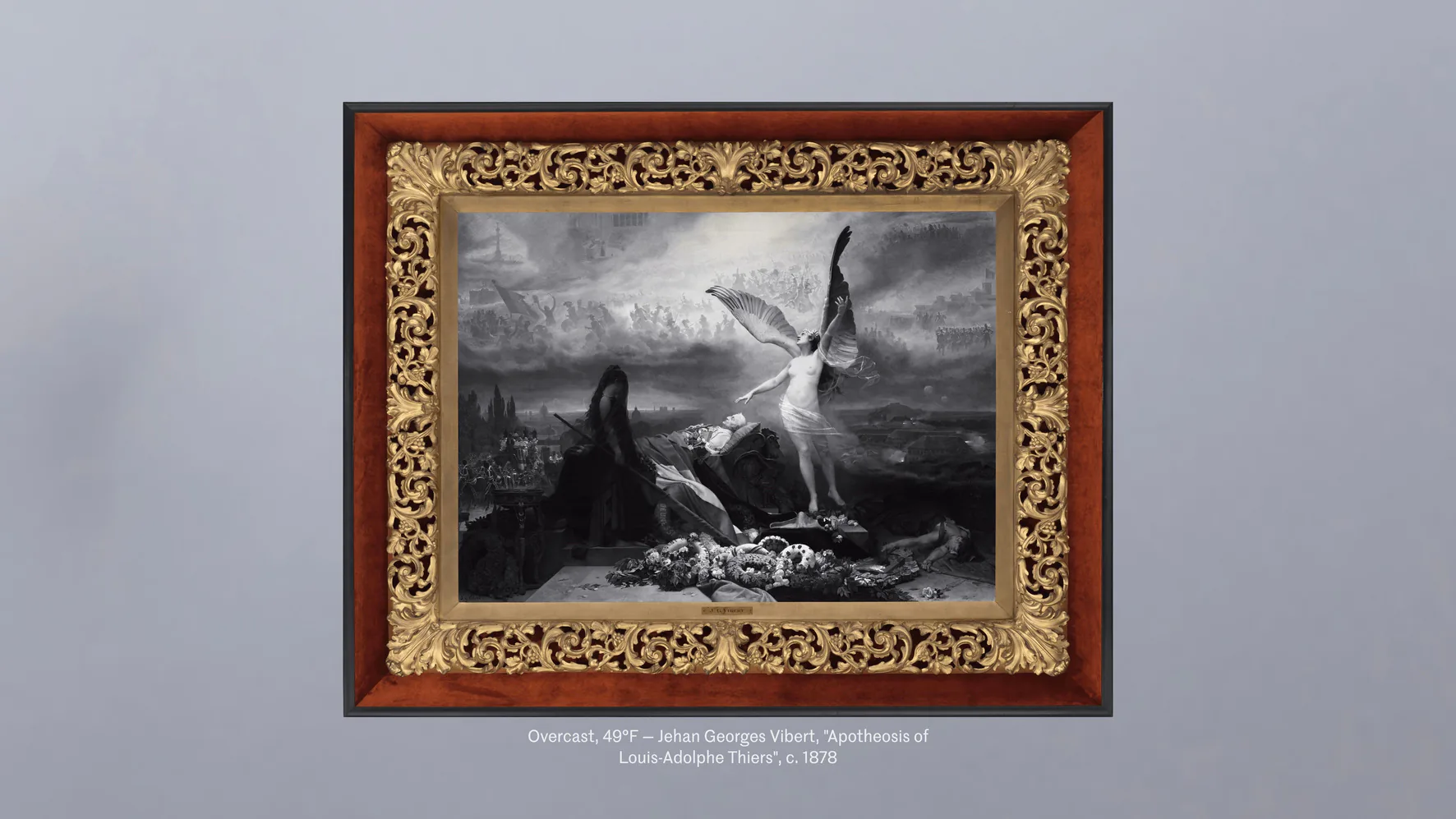
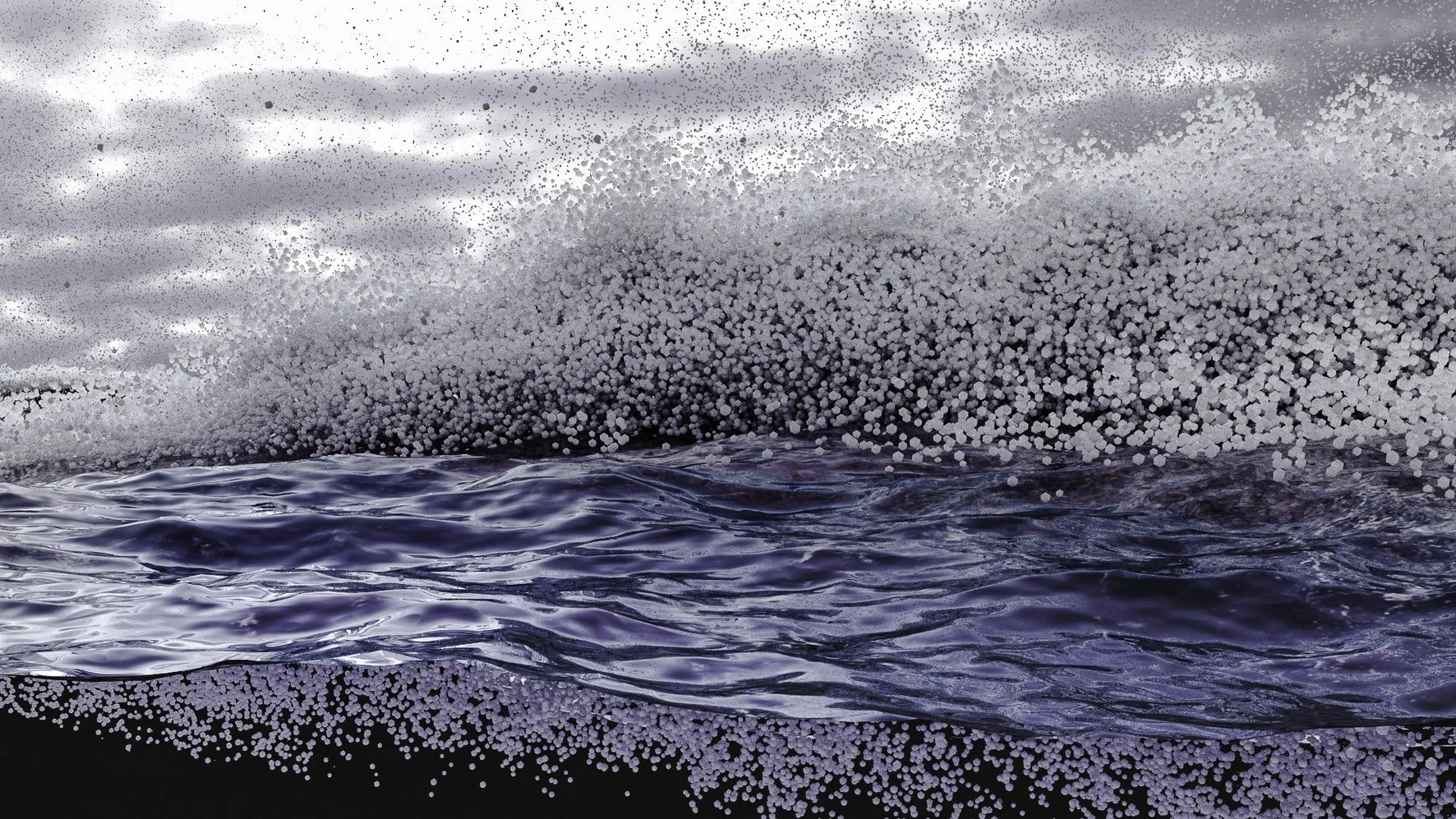
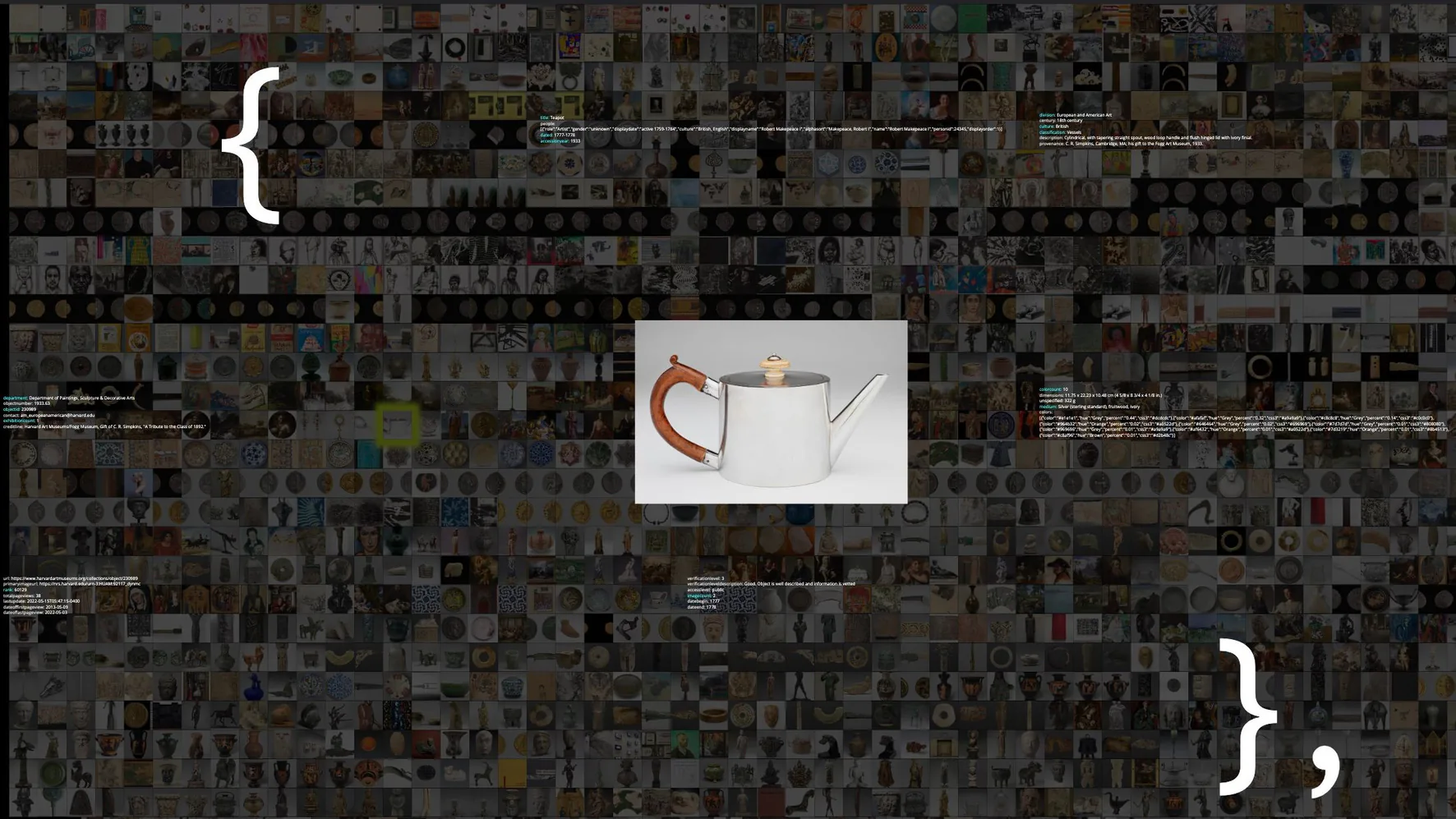
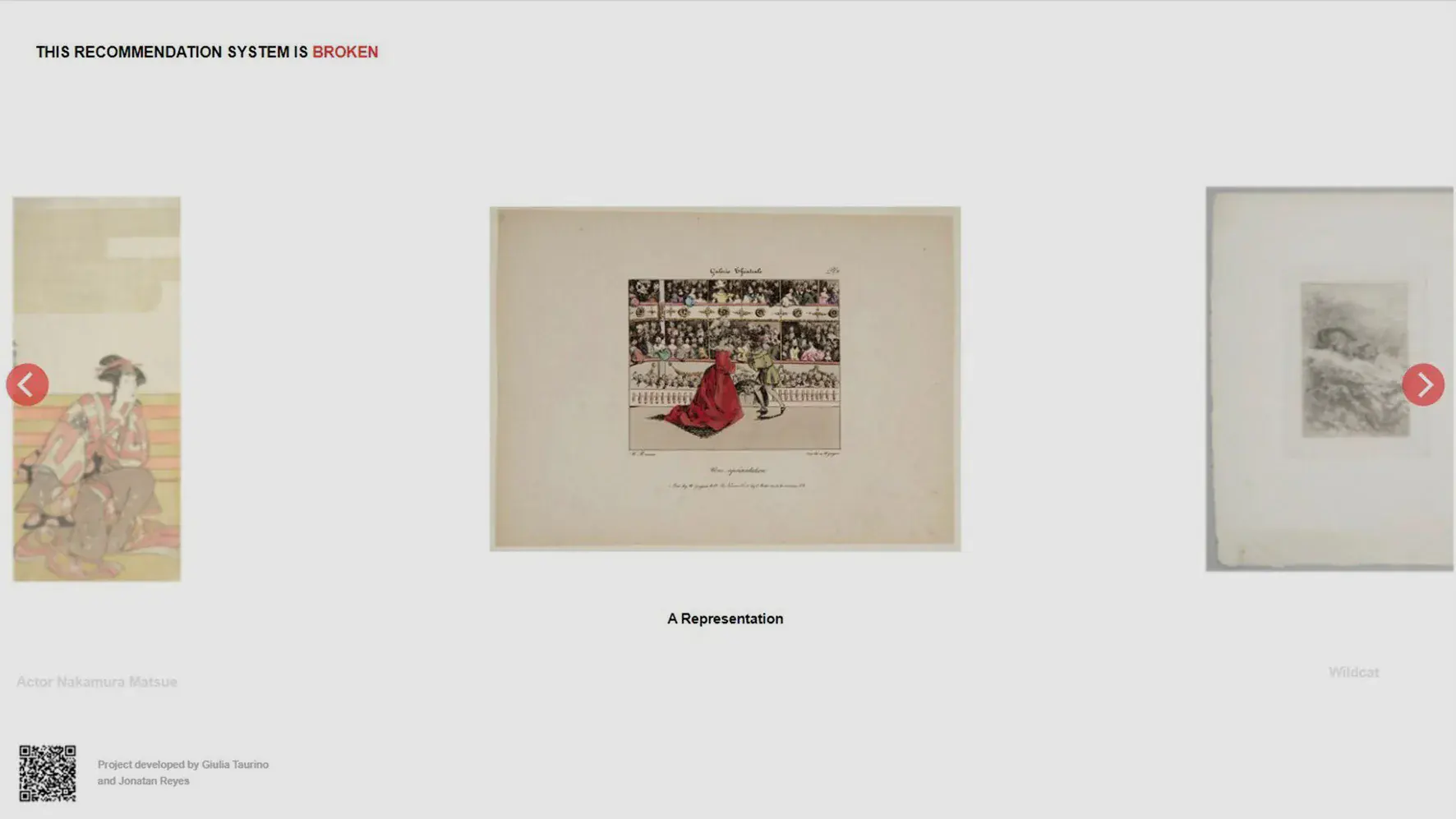
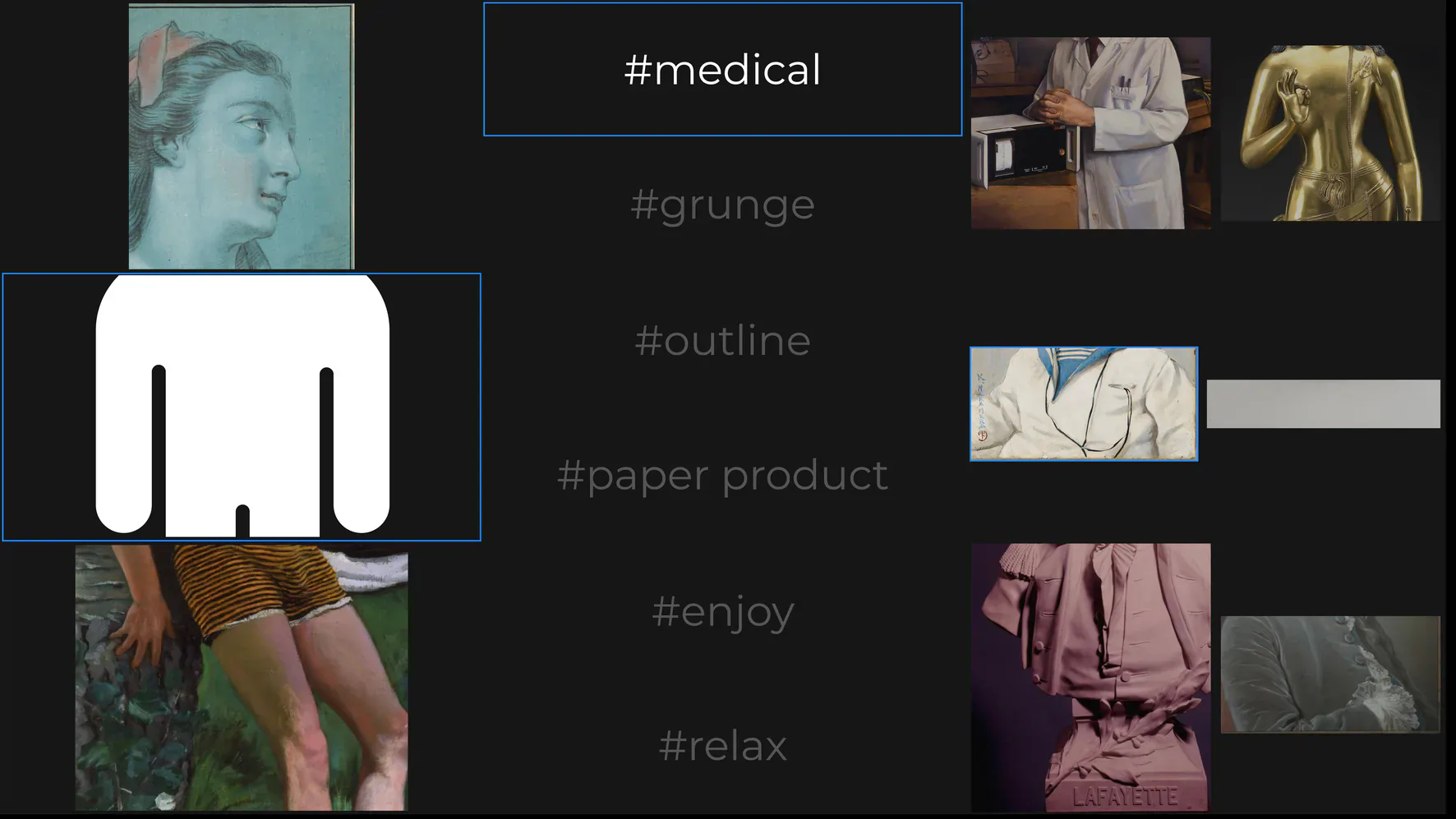
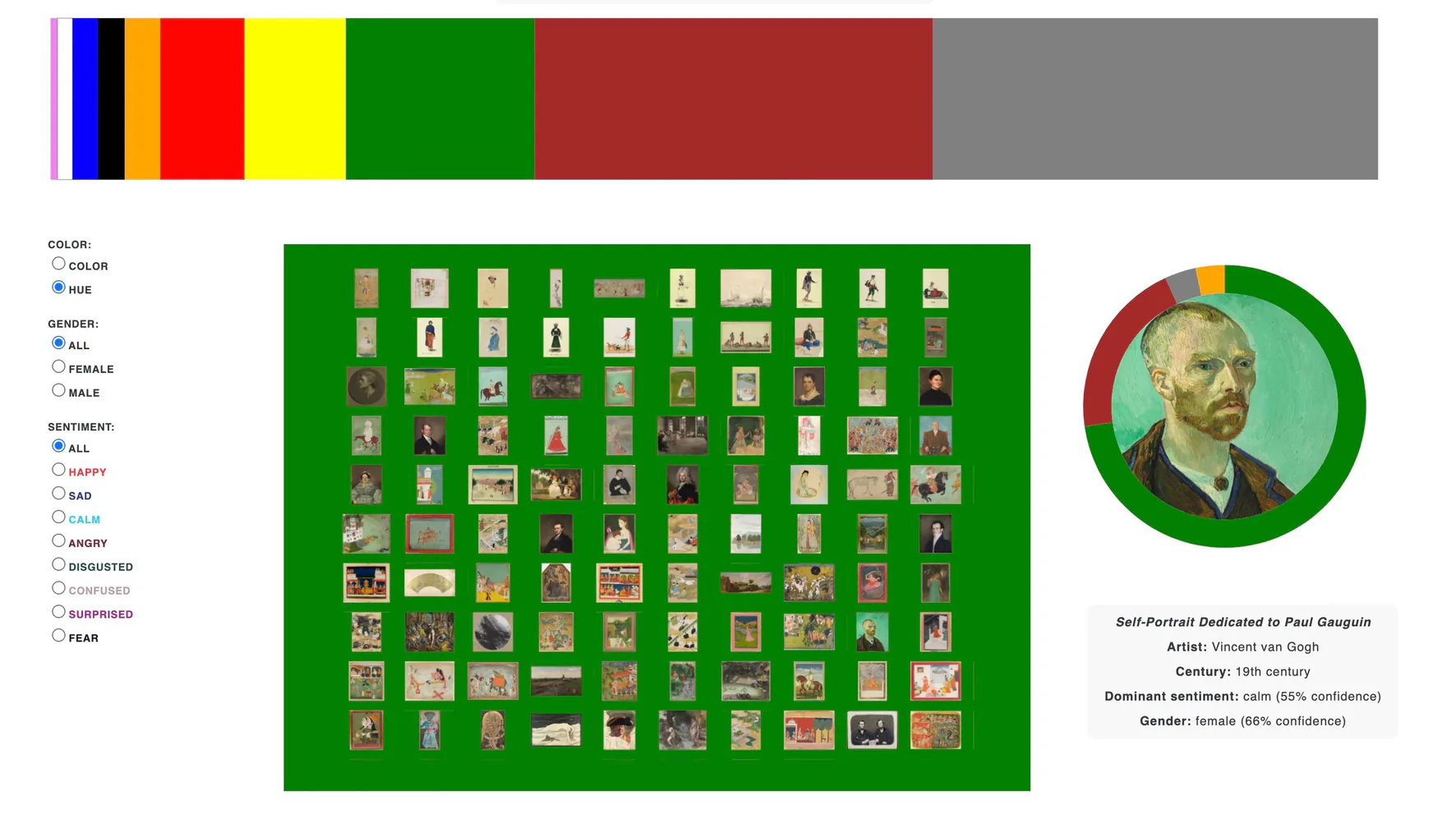
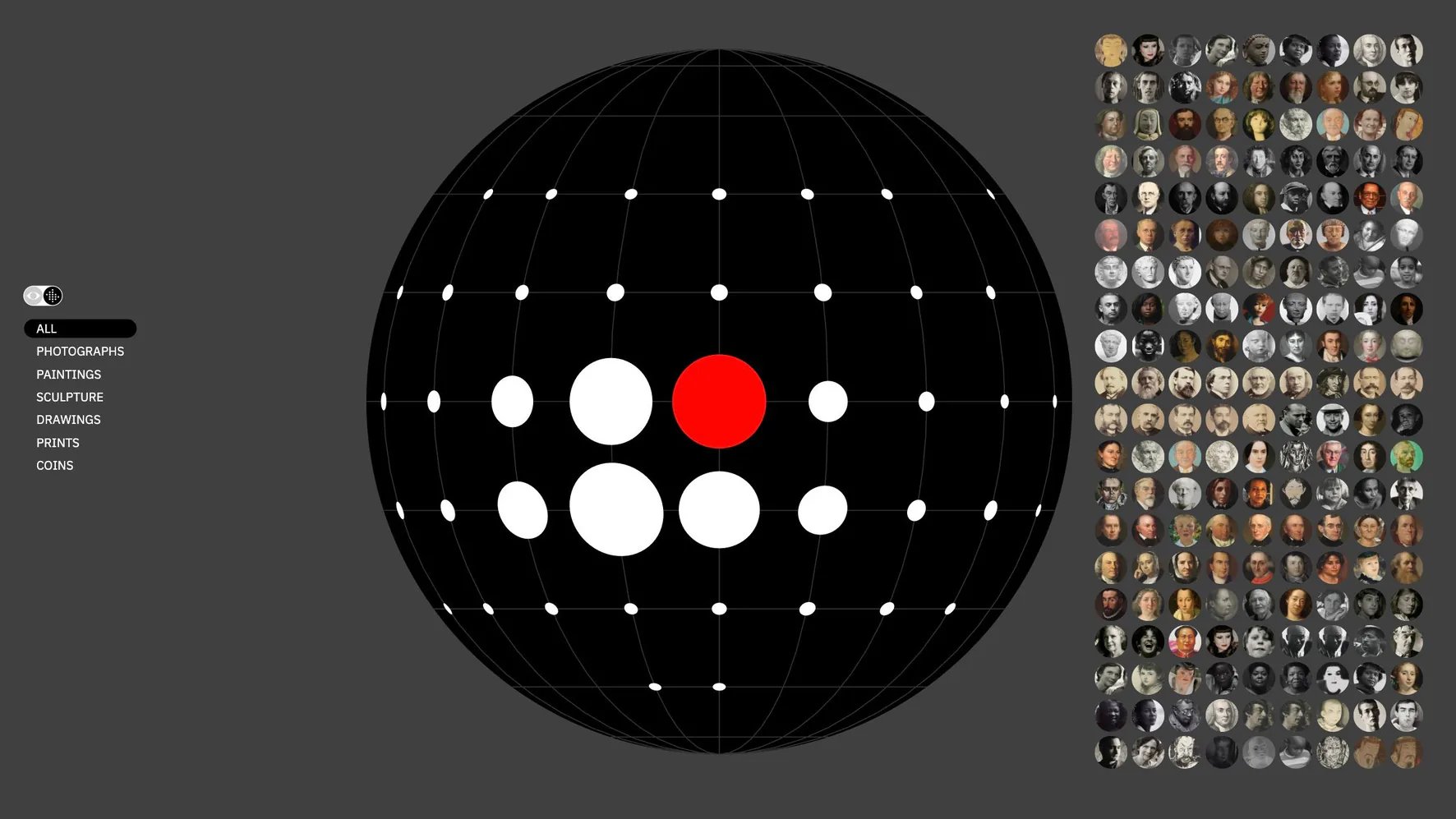
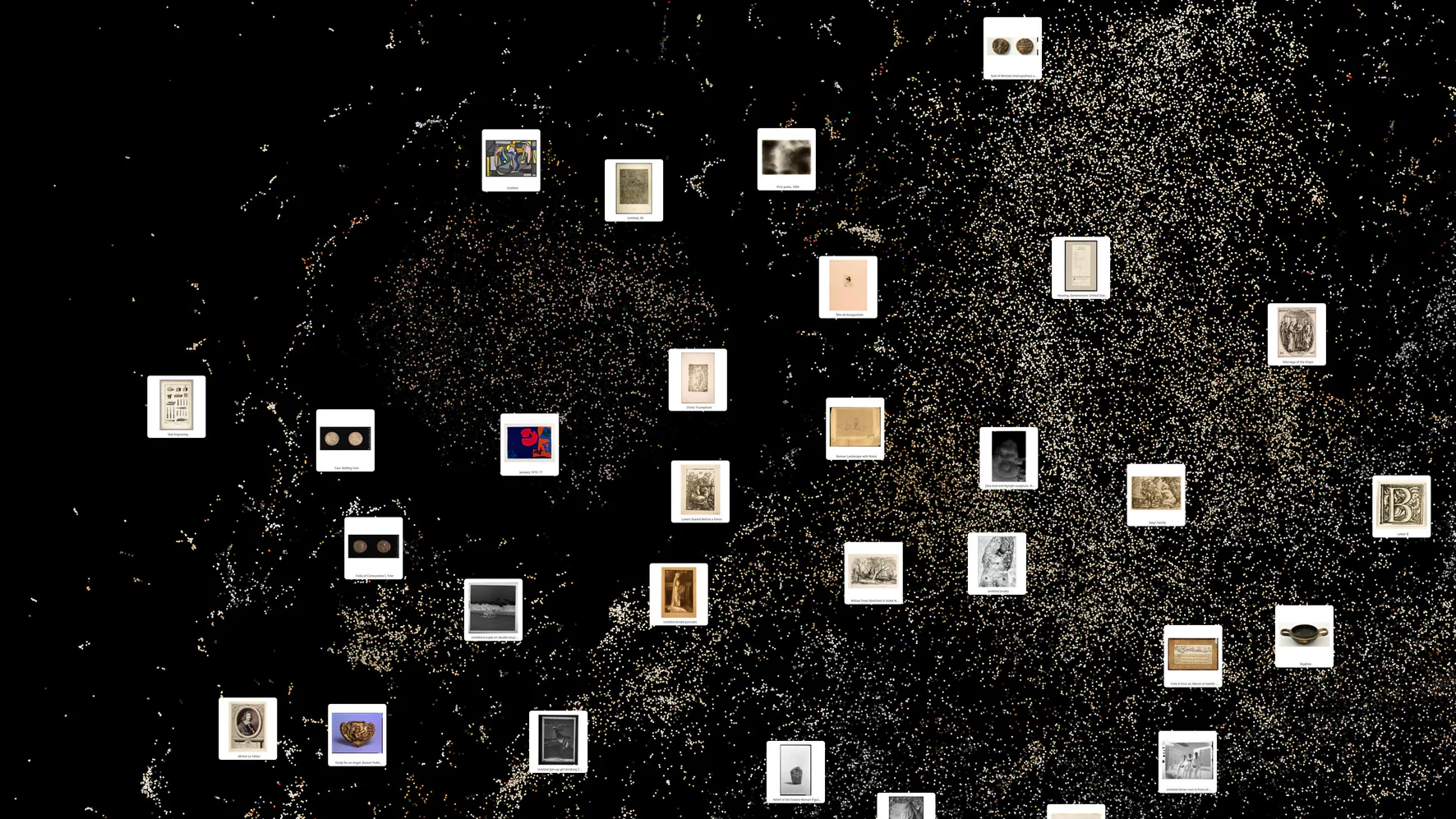
Eleven digital installations were shown in the Lightbox Gallery. Commissioning, grouping, and setting the weekly rotation were metaLAB’s to decide, in dialogue with HAM staff. Today, all the material is carefully collected on the web, ensuring the works remain accessible beyond the exhibition (metaLAB 2022a). Reflecting diverse approaches, the installations are classified into four categories: playful, investigative, critical, and panoramic. 1) Playful installations — Sympoietic System and AIxquisite Corpse — explore interactive and imaginative engagements with art through AI. 2) Investigative installations — Watching Machines Loving Grace, Second Look: Gender and Sentiment on Show, A Flitting Atlas of the Human Gaze, and Processing the Page: Computer Vision and Otto Piene’s Sketchbooks — use machine learning for deep analysis of art collections. 3) Critical installations — Igùn, Ocean Amplification, and This Recommendation System Is Broken — question AI’s impact and ethical considerations. 4) Panoramic installations — Surprise Machines and HAM Object Map — offer comprehensive explorations of the museums’ collection. All eleven installations are described below through images and captions, in the order in which they appeared week by week at HAM (see Figures 4 through 14).
Choreographic Interface for Touchless Interaction
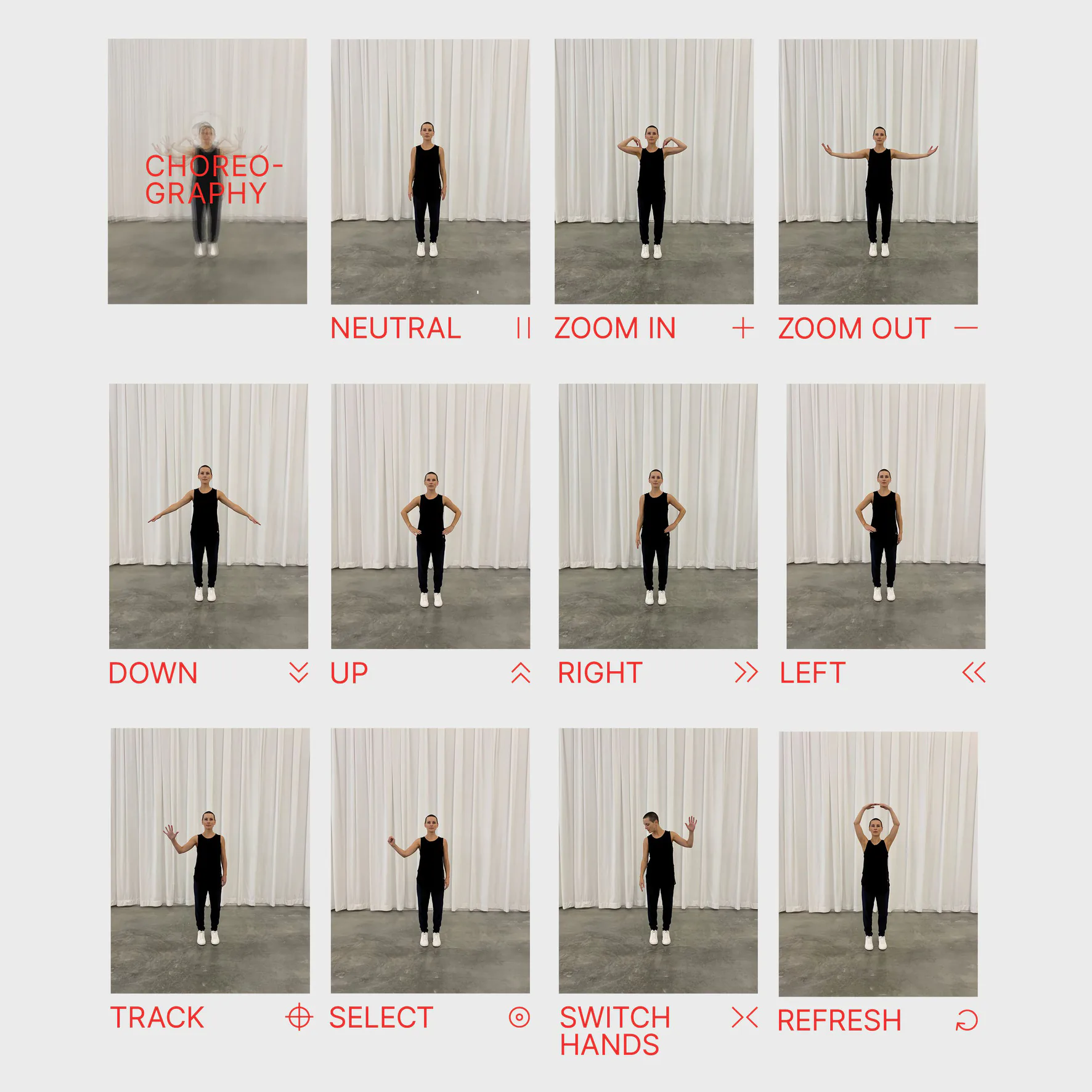
To support post-Covid-19 social distancing, a metaLAB team set out to design an alternative solution for touchless interaction. They called this system Choreographic Interface. Conceptualized by the metaLAB member Lins Derry in dialogue with Sydney Skybetter, Founder of the Conference for Research on Choreographic Interfaces at Brown University, the interface enables touchless interaction through computer vision and machine learning (see Figure 15). With the digital installations, it translates full-torso gestures for conventional interactions like tracking and zooming (Derry 2023; Derry et al. 2022b).
Drawing on Derry’s background in dance, the design process underscores the potential of choreographed movement as a medium for interaction. The Choreographic Interface underwent multiple stages of design, adapting to installations that demand visitor participation. Among them, Surprise Machines (Rodighiero et al. 2022a) posed the greatest challenge due to its large vocabulary of interactions designed to explore the entirety of HAM’s archives (Derry and Rodighiero 2024).
Unfortunately, the Choreographic Interface was not included in the 2022 exhibition due to the obsolescence of the museum’s hardware (Rodighiero et al. 2022b, 20–30). Instead, visitors navigated the digital installations using an air mouse, a more familiar interface with select, zoom, and scroll functions. While many engaged with this setup effortlessly, others faced challenges due to varying levels of digital fluency, echoing findings from research by Katy Börner et al. (2016). The transition from a fully interactive, gesture-based system to a more conventional interface underscored the limitations of digital interaction in museum spaces.
Despite this failure, the Choreographic Interface continues to open new avenues for engaging with art and data through embodied movement. One of the most notable instances of its reuse took place at Penn State University, where students explored the Choreographic Interface under the guidance of Betsy Campbell, integrating embodied movement into their projects (WTAJ News 2023).
The Trajectory of HAM’s Lightbox Gallery
Despite cultural changes, integrating new technologies into museums remains a challenge. HAM repurposed a former meeting room into a laboratory for experimental museology, where Curatorial A(i)gents was the penultimate exhibition. Established in 2012 and inaugurated in 2014, the Lightbox Gallery was reimagined as a lounge for visitors in 2022. This last transition reflects not only the venue’s lifecycle — which had always been considered a temporary experiment — but also the outdated technical equipment, which forced some installations to be scaled down (Rodighiero et al. 2022b, 29–30). By failing to establish a sustainable digital venue, the museums demonstrated a form of resistance to fully embracing the digital era. A museum of art history like HAM, it seems, can operate without such a space. The reason looks less financial than locational: never designed by Renzo Piano for exhibitions, the room sat apart from the main galleries despite clear signage. That separation likely lowered visitor flow, and with it drew negative feedback from stakeholders. The closure of the Lightbox Gallery marks the end of a unique experimental space but has also sparked broader discussions about museum design: when digital spaces are not integrated from the outset in museum architecture, achieving successful digital exhibitions becomes challenging.
Conclusions: Curatorship as Supervision
Curatorial A(i)gents proposed that the curatorial act changes character once a collection exceeds what any curator can hold in view, and that what then remains to the human agent is supervision: directing a machine’s attention, correcting its output, and deciding what that output means. Four public panels held between March and May sorted most of the exhibition into four groupings, each naming a distinct mode of supervision: Investigative, Choreographic, Critical, and Panorama.
The Investigative Panel (Albrecht et al. 2022) treats computer vision as an instrument of art-historical inquiry and attends closely to what that instrument discards. A Flitting Atlas of the Human Gaze extracts pairs of eyes across painting, print, sculpture, and coin and maps gaze direction in aggregate, a cartography legible only because human judgment was applied to machine output at scale. Second Look: Gender and Sentiment on Show runs the portrait collection through classification services and reports what returns: gender assigned as a confidence-scored binary, and sentiment read as overwhelmingly calm across the collection. Watching Machines Loving Grace exhibits the fragments that facial recognition crops away, arguing that computation is reductive by design. Processing the Page: Computer Vision and Otto Piene’s Sketchbooks applies color analysis to nine thousand digitized pages, rendering a working lifetime legible as both pattern and gesture. Supervision here is corrective: what it supervises is an instrument’s omissions.
The Choreographic Panel (Derry et al. 2022a) locates supervision in the body. The only one of the four organized around a method rather than a set of works, it convened practitioners from tangible-media research around an object that never reached the 2022 gallery. The Choreographic Interface was built once the pandemic made shared input devices untenable, and its making records an asymmetry: gestures drawn from dance had to be simplified into geometric positions before the computer-vision model could recognize them, and the resulting vocabulary tracks, selects, and zooms much as a mouse does. Supervision here is embodied: what it supervises is a vocabulary of gestures.
The Critical Panel (Atairu et al. 2022) turns the collection’s own gaps into exhibition content. Each of its three works sent one of its authors to the panel, whose coherence was authorial as much as thematic. Igùn trains a generative adversarial network on images of looted Benin bronzes to propose what the seventeen-year interruption after 1897 prevented from being made. This Recommendation System Is Broken refuses prediction, surfacing through randomization the objects not exhibited at all; that the algorithm still returned predominantly Western works locates the bias in the collection itself. Ocean Amplification ties the rising wave heights of its GAN-generated simulation to the energy the model consumes, making the instrument’s environmental cost part of the display. Supervision here is self-implicating: what it supervises is the collection’s own bias.
The Panorama Panel (Rodighiero et al. 2022c) addresses the collection as a whole and finds that the whole is a portrait of decisions. The panel billed itself as a discussion of panoramic and playful perspectives alike, which is how a game of recombination came to be considered alongside two collection-scale surveys. Surprise Machines arranges the entire digitized collection of 230,000 items by image similarity; the clusters it yields are readily legible, and the objects that fall between them reward attention. HAM Object Map attaches to each of the 1,803 objects a visitor has already walked past the records a wall label omits: provenance, acquisition date, exhibition history, online consultation. Those objects were the institution’s own selection, which makes the installation a self-portrait of curatorial choice. AIxquisite Corpse makes the same argument through play, since users assembled gender-, medium-, or period-normative combinations before attempting deliberate transgression. Supervision here is aggregative: what it supervises is a classification system.
Read across the four panels, curatorship as supervision acquires four objects — an instrument’s omissions, a vocabulary of gestures, a collection’s bias, a classification system — and one procedure: the curator sets the machine’s task, corrects its output, and chooses which of its relations to display. What the panels hold in common is that their criticality arose in the design process itself: working with an instrument that appears to see everything forces the question of what it omits. A visualization can display a relation without disclosing its reason, and that reason stays out of reach unless those who built the system account for it. Curatorship without hands still has an author.
References
- Alarcón, Francisco, Boris Konik, and Stefan Helmreich. 2022. “Ocean Amplification.” metaLAB (at) Harvard & FU Berlin. https://metalab.harvard.edu/p/ocean-amplification/.
- Albrecht, Kim. 2022. “Watching Machines Loving Grace.” metaLAB (at) Harvard & FU Berlin. https://metalab.harvard.edu/p/watching-machines-loving-grace/.
- Albrecht, Kim, Jeffrey Schnapp, Lins Derry, and Jeff Steward. 2022. “Curatorial A(i)gents – Investigative Panel.” Vimeo. https://vimeo.com/717967714.
- Atairu, Minne. 2022. “Igùn.” metaLAB (at) Harvard & FU Berlin. https://metalab.harvard.edu/p/igun/.
- Atairu, Minne, Francisco Alarcón, and Giulia Taurino. 2022. “Curatorial A(i)gents – Critical Panel.” Vimeo. https://vimeo.com/717967490.
- Azar, Mitra, Geoff Cox, and Leonardo Impett. 2021. “Introduction: Ways of Machine Seeing.” AI & Society 36 (4): 1093–1104. https://doi.org/10.1007/s00146-020-01124-6.
- Benjamin, Ruha. 2019. Race after Technology: Abolitionist Tools for the New Jim Code. Medford, MA: Polity.
- Börner, Katy, Adam Maltese, Russell Nelson Balliet, and Joe Heimlich. 2016. “Investigating Aspects of Data Visualization Literacy Using 20 Information Visualizations and 273 Science Museum Visitors.” Information Visualization 15 (3): 198–213. https://doi.org/10.1177/1473871615594652.
- Crawford, Kate. 2021. The Atlas of AI: Power, Politics, and the Planetary Costs of Artificial Intelligence. New Haven and London: Yale University Press.
- Cuno, James B., ed. 1996. Harvard’s Art Museums: 100 Years of Collecting. Cambridge, MA and New York: Harvard University Museums.
- Derry, Lins. 2022. “Second Look: Gender and Sentiment on Show.” metaLAB (at) Harvard & FU Berlin. https://metalab.harvard.edu/p/second-look/.
- ———. 2023. “Data Embodiment: Approaching the Body as a Choreographic Medium for Performing Abstract Data.” International Journal of Performance Arts and Digital Media 19 (1): 60–82. https://doi.org/10.1080/14794713.2023.2175105.
- Derry, Lins, Hiroshi Ishii, Ozgun Kilic Afsar, and Sydney Skybetter. 2022a. “Curatorial A(i)gents – Choreographic Panel.” Vimeo. https://vimeo.com/717966867.
- Derry, Lins, Jordan Kruguer, Maximilian C. Mueller, and Jeffrey Schnapp. 2022b. “Designing a Choreographic Interface during Covid-19.” In MOCO ’22: Proceedings of the 8th International Conference on Movement and Computing. https://doi.org/10.1145/3537972.3538020.
- Derry, Lins, Jordan Kruguer, Maximilian C. Mueller, Jeffrey Schnapp, and Dario Rodighiero. 2022c. “Choreographic Interface.” metaLAB (at) Harvard & FU Berlin. https://metalab.harvard.edu/p/choreographic-interface/.
- Derry, Lins, and Dario Rodighiero. 2024. “Choreography, Design, and Technology: An Interview with Lins Derry from the metaLAB (at) Harvard.” In Per–Forming Spaces: On Designing Phygital Narratives within the Cultural Heritage Ecosystem. Bozen/Bolzano: Biblion Edition.
- Hartwig, Keith, Daniel Newman, and Kevin Brewster. 2022. “AIxquisite Corpse.” metaLAB (at) Harvard & FU Berlin. https://metalab.harvard.edu/p/a-ixquisite-corpse/.
- Harvard University. 2019. “Harvard Art Museums IIIF.” https://iiif.harvard.edu/collaborators/harvard-art-museums/.
- Huang, Han-Yin, and Cynthia C. S. Liem. 2022. “Social Inclusion in Curated Contexts: Insights from Museum Practices.” In 2022 ACM Conference on Fairness, Accountability, and Transparency, 300–309. Seoul: ACM. https://doi.org/10.1145/3531146.3533095.
- Joselit, David. 2020. “Postword.” In Curatorial A(i)gents, edited by Mike Maizels and Chelsea Qiu. Cambridge, MA: metaLAB (at) Harvard. https://www.printedmatter.org/catalog/57243/.
- Maizels, Mike, and Chelsea Qiu, eds. 2020. Curatorial A(i)gents. Cambridge, MA: metaLAB (at) Harvard. https://www.printedmatter.org/catalog/57243/.
- metaLAB. 2022a. “Curatorial A(i)gents.” metaLAB (at) Harvard & FU Berlin. https://metalab.harvard.edu/p/curatorial-aigents/.
- ———. 2022b. “metaLAB (at) Harvard, Berlin & Basel.” https://metalab.harvard.edu/.
- Qiu, Chelsea. 2020. “Curatorial A(i)gents – Teaser.” Vimeo. https://vimeo.com/448180018.
- Rodighiero, Dario, Carla Zhara Buda, and Angela Parente. 2026. “Archives, Museums, and Installations: Aldo Rossi’s Legacy in Digital Transition.” Preservation, Digital Technology & Culture 55 (1): 45–53. https://doi.org/10.1515/pdtc-2025-0066.
- Rodighiero, Dario, Lins Derry, Douglas Duhaime, Jordan Kruguer, Maximilian C. Mueller, Christopher Pietsch, Jeffrey Schnapp, and Jeff Steward. 2022a. “Surprise Machines.” metaLAB (at) Harvard & FU Berlin. https://metalab.harvard.edu/p/surprise-machines/.
- Rodighiero, Dario, Lins Derry, Douglas Duhaime, Jordan Kruguer, Maximilian C. Mueller, Christopher Pietsch, Jeffrey T. Schnapp, Jeff Steward, and metaLAB. 2022b. “Surprise Machines: Revealing Harvard Art Museums’ Image Collection.” Information Design Journal 27 (1): 21–34. https://doi.org/10.1075/idj.22013.rod.
- Rodighiero, Dario, Alberto Romele, José Higuera Rubio, Celeste Pedro, Matteo Azzi, and Giorgio Uboldi. 2023. “Advanced Interface Design for IIIF: A Digital Tool to Explore Image Collections at Different Scales.” Umanistica Digitale 16: 167–92. https://doi.org/10.6092/ISSN.2532-8816/17230.
- Rodighiero, Dario, Jeffrey Schnapp, Sinan Goknur, Keith Hartwig, and Dan Newman. 2022c. “Curatorial A(i)gents – Panorama Panel.” Vimeo. https://vimeo.com/717968112.
- Ross, Jen, Philippa Sheail, Melissa Terras, and Cate Schofield. 2024. “Infrastructure Futures for Digital Cultural Heritage.” University of Edinburgh. https://doi.org/10.5281/ZENODO.13710266.
- Russell, Stuart J., and Peter Norvig. 2016. Artificial Intelligence: A Modern Approach. 3rd ed., global ed. Prentice Hall Series in Artificial Intelligence. Pearson.
- Schaerf, Ludovica, Pepe Ballesteros, Valentine Bernasconi, Iacopo Neri, and Dario Negueruela del Castillo. 2023. “AI Art Curation: Re-Imagining the City of Helsinki in Occasion of Its Biennial.” arXiv. https://doi.org/10.48550/ARXIV.2306.03753.
- Schmitt, Philipp. 2022. “Sympoietic System.” metaLAB (at) Harvard & FU Berlin. https://metalab.harvard.edu/p/sympoietic-system/.
- Schnapp, Jeffrey. 2020. “Iqueries.” In Curatorial A(i)gents, edited by Mike Maizels and Chelsea Qiu. Cambridge, MA: metaLAB (at) Harvard. https://www.printedmatter.org/catalog/57243/.
- Schnapp, Jeffrey, Dietmar Offenhuber, Todd Linkner, and Kevin Brewster. 2022. “A Flitting Atlas of the Human Gaze.” metaLAB (at) Harvard & FU Berlin. https://metalab.harvard.edu/p/a-flitting-atlas-of-the-human-gaze/.
- Schnapp, Jeffrey, Jessica Yurkofsky, and Sinan Goknur. 2022. “HAM Object Map.” metaLAB (at) Harvard & FU Berlin. https://metalab.harvard.edu/p/ham-object-map/.
- Steward, Jeff. 2020. “AI at the Harvard Art Museums.” In Curatorial A(i)gents, edited by Mike Maizels and Chelsea Qiu. Cambridge, MA: metaLAB (at) Harvard. https://www.printedmatter.org/catalog/57243/.
- Steward, Jeff, and Lauren Hanson. 2022. “Processing the Page: Computer Vision and Otto Piene’s Sketchbooks.” metaLAB (at) Harvard & FU Berlin. https://metalab.harvard.edu/p/processing-the-page/.
- Steward, Jeff, Ming Tu, Ian Callahan, and Chris Molinski. 2016. “What Remains Invisible? Building Infrastructure and Collaborative Spaces in the Harvard Art Museums.” In MW2016: Museums and the Web 2016. Los Angeles, CA. https://mw2016.museumsandtheweb.com/paper/what-remains-invisible-building-infrastructure-and-collaborative-spaces-in-the-harvard-art-museums/index.html.
- Taurino, Giulia. 2021. “Experiments in Machine Unlearning: On Algorithmic Curation and Museums Marginalia.” The Digital Review, no. 1. https://doi.org/10.7273/EHB6-GW12.
- ———. 2022. “The Brokenness in Our Recommendation Systems: Computational Art for an Ethical Use of A.I.” In Disruptive Technologies in Media, Arts and Design, edited by Alexiei Dingli, Alexander Pfeiffer, Alesha Serada, Mark Bugeja, and Stephen Bezzina, 157–68. Cham: Springer International Publishing.
- ———. 2023. “Algorithmic Art and Cultural Sustainability in the Museum Sector.” In The Ethics of Artificial Intelligence for the Sustainable Development Goals, edited by Francesca Mazzi and Luciano Floridi, 327–45. Cham: Springer International Publishing. https://doi.org/10.1007/978-3-031-21147-8_18.
- Taurino, Giulia, and Jonatan Reyes. 2022. “This Recommendation System Is Broken.” metaLAB (at) Harvard & FU Berlin. https://metalab.harvard.edu/p/this-recommendation-system-is-broken/.
- Thiel, Sonja, and Johannes C. Bernhardt, eds. 2023. AI in Museums: Reflections, Perspectives and Applications. Edition Museum 74. Bielefeld: transcript Verlag. https://doi.org/10.14361/9783839467107.
- Tu, Ming, and Jeff Steward. (2016) 2024. “Virtual Lightbox Gallery.” JavaScript. Harvard Art Museums. https://github.com/harvardartmuseums/lightbox-3D-model.
- Turing, Alan M. 1950. “Computing Machinery and Intelligence.” Mind LIX (236): 433–60. https://doi.org/10/b262dj.
- Van Dijck, José. 2014. “Datafication, Dataism and Dataveillance: Big Data between Scientific Paradigm and Ideology.” Surveillance & Society 12 (2): 197–208. https://doi.org/10.24908/ss.v12i2.4776.
- WTAJ News. 2023. “Penn State Students Showcase AI.” YouTube. https://www.youtube.com/watch?v=O9cJdoxYl6k. Accessed August 11, 2026.