Design Without Hands: Rebuilding a Web Application with AI
Rodighiero, Dario. Forthcoming. “Design Without Hands: Rebuilding a Web Application with AI.” Progetto Grafico.
What remains of design when the designer no longer draws any part of it? This essay answers through a single case study: a network visualization that lays a scientific community on a sphere, rebuilt in dialogue with an AI six years after its first publication. Behind the rebuild stands a long inheritance, from Ptolemy’s cartography to Peirce’s projection and open-source code, all turned against the same enemy: the unjust margin. And behind the inheritance stands a traditional figure, the architect who conceives but does not build. Across five working sessions the machine proposes and executes while the designer judges, refuses, and answers for the final result. Design without hands, the essay argues, is not authorship diminished but authorship sharpened.
In a Bauhaus classroom, a century ago, Johannes Itten taught his students that design and form are not the same thing. Design is the generative idea; form is the object that idea becomes: the book, the chair, the lamp (Itten [1963] 1975). For Itten the seam between the two words was a lesson in reading, not a fact of production, because the same hands that conceived the work went on to make it. Design and form stayed fused in a single person, and the distinction lived quietly in theory. It no longer does. When a machine writes the code, combines the visual elements, and produces the artifact, conception and making come apart, and the question arrives with force: when the seam becomes a split, what remains on the designer’s side? Victor Papanek answered long before the question could be asked: design was never style but responsibility, the answering for consequences (Clarke 2021; Papanek [1971] 1985). More recently, Manuel Lima has gathered artifacts where the split is native: algorithms have long produced the form, and the author decides what the network means (Lima 2011).
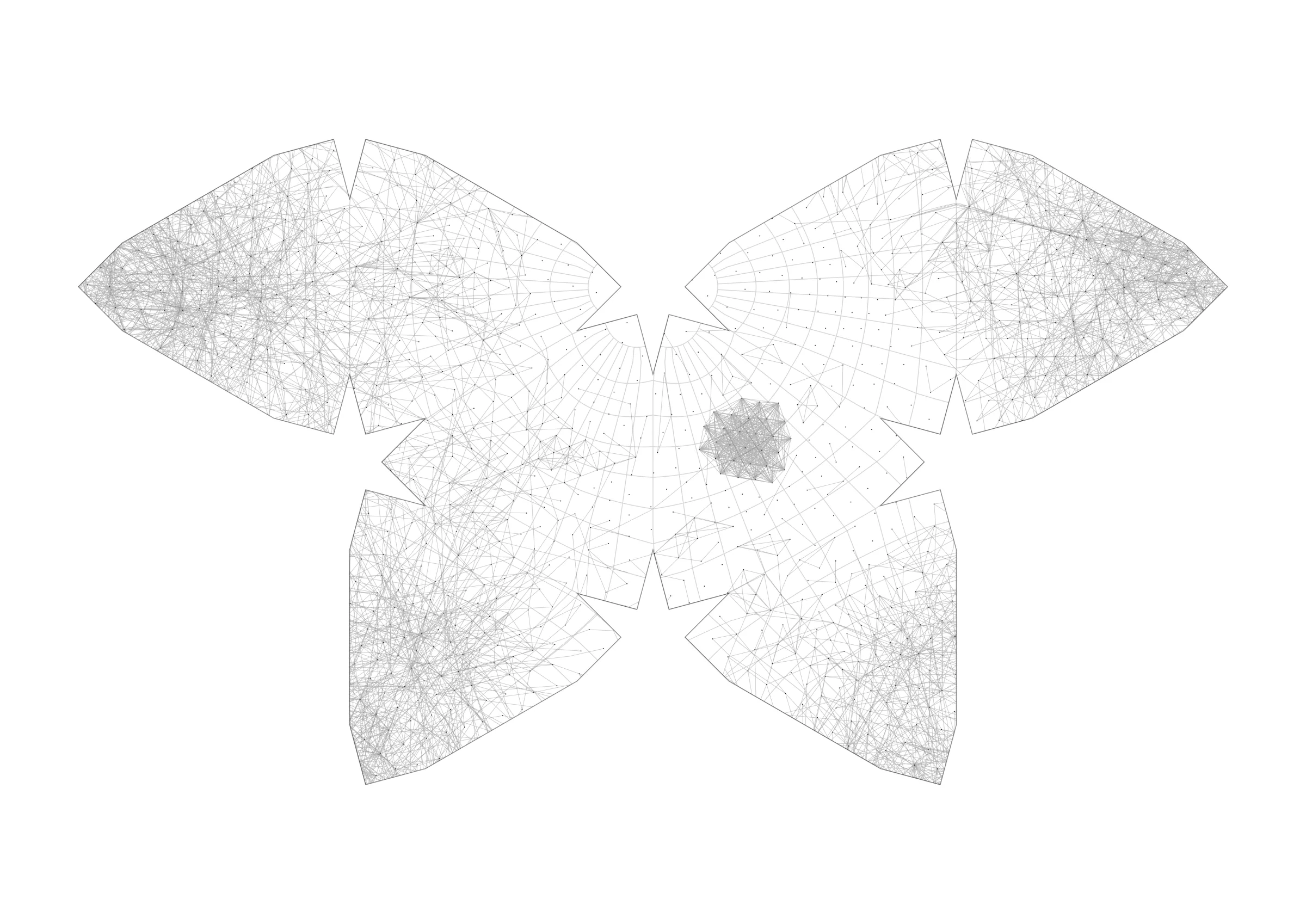
This summer, a network visualization was rebuilt in five working sessions with a machine, without its author writing a single line of code. The results are public as a web application (Rodighiero 2026a) and code (Rodighiero 2026b). What was rebuilt is a co-authorship graph developed six years earlier, which lays a scientific community not on a flat surface but on a sphere (Rodighiero 2020). The sphere was never an ornament. In a network, every flat layout condemns someone to the edges, and whoever lands there reads as peripheral, minor, almost gone. A sphere has no edge: every point on its surface is interior, and anyone can be the center if you only turn the globe. That was the original argument, representation as a matter of design justice, democratized by geometry (Costanza-Chock 2020; Rodighiero 2021). But a sphere cannot be printed; to reach the page it must be flattened. This is the old problem of cartographic projection, and nearly 90 projections now sit in the rebuilt tool. So the project doubles back on itself: a work about removing margins becomes, in its remaking, a test of what remains of the designer.
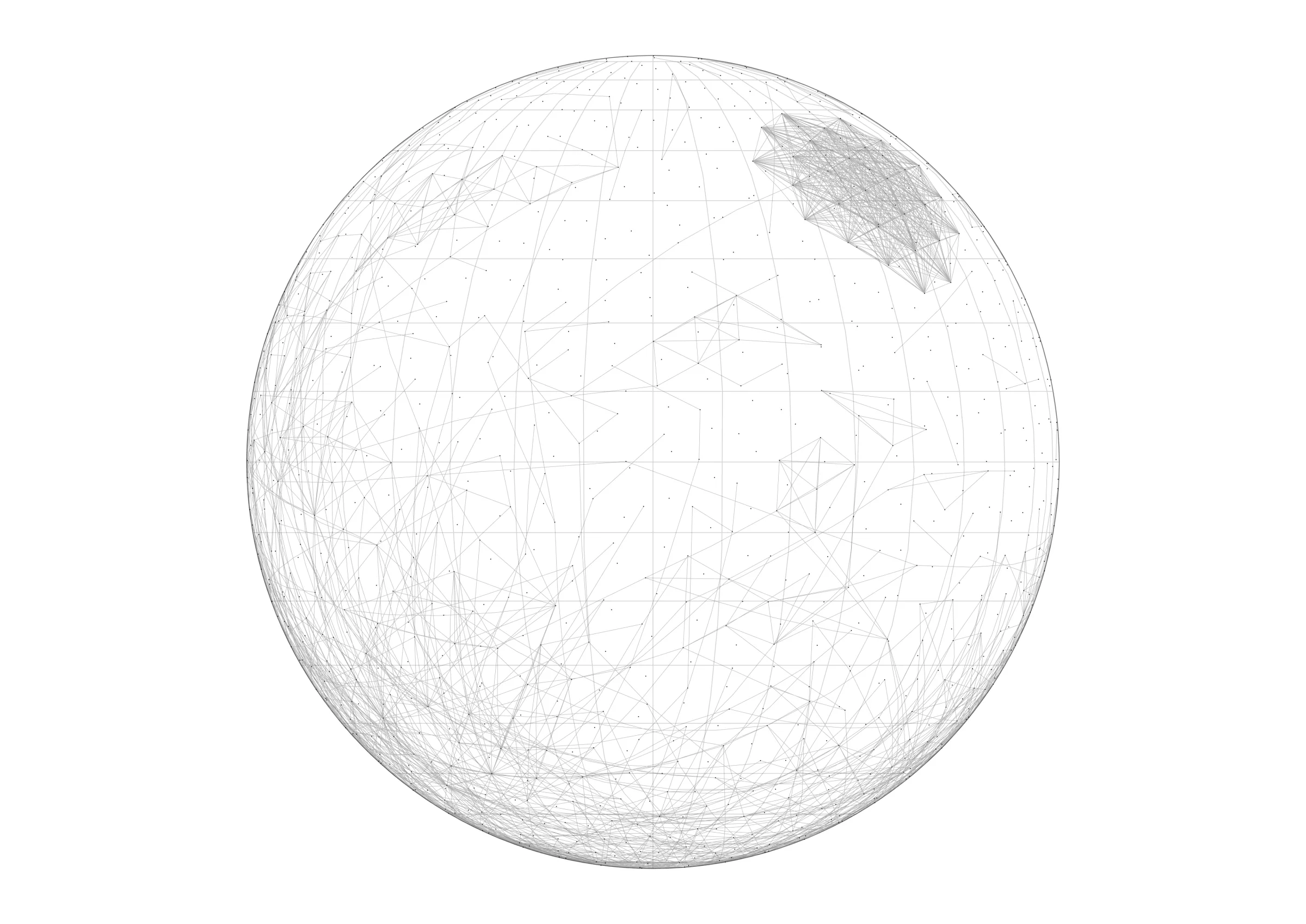
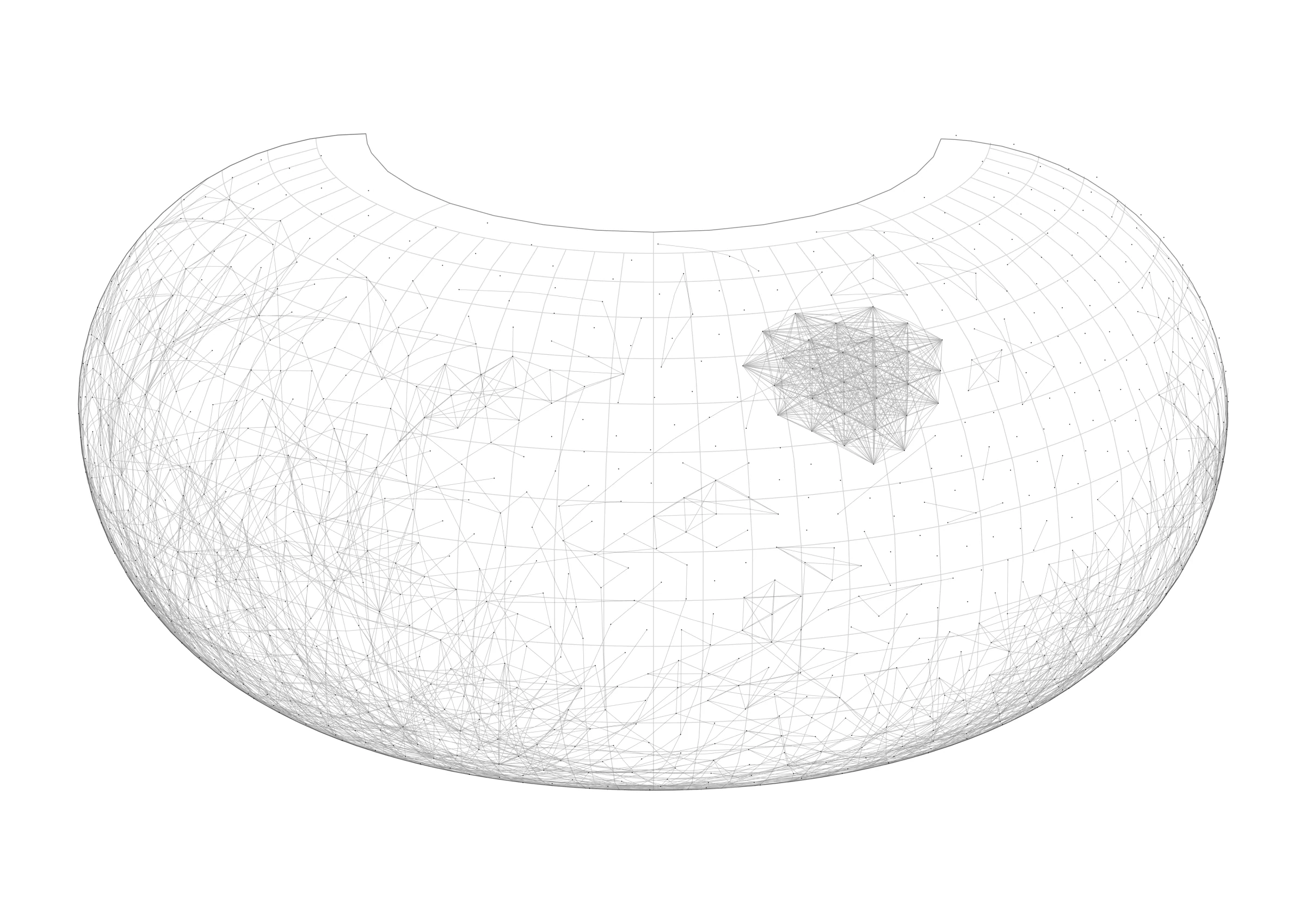
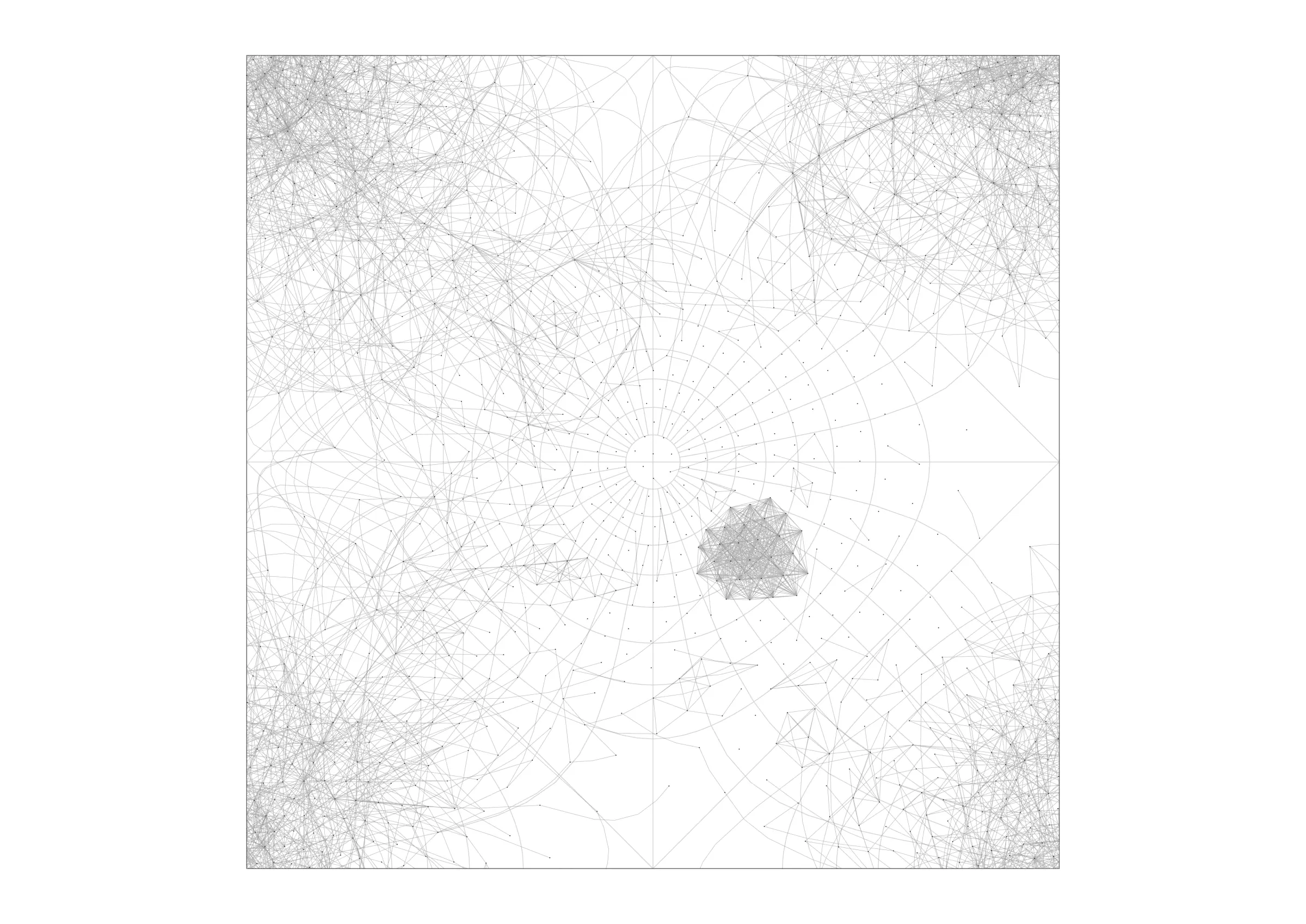
The flattening begins with Ptolemy, who assigned coordinates to the known world and invented the problem this essay is still working on: how to represent a sphere on a flat surface without distortion (Dilke 1987). For seventeen centuries the problem passed from hand to hand, each cartographer trading one distortion for another. In 1879 Charles S. Peirce offered his own: the entire globe folded into a square, with distortion placed along the sides (Peirce 1879). No projection is neutral: each decides who bears the distortion, and choosing one has always been an act of authorship, the cartographer’s and now the designer’s. Then the lineage became code. With the d3 libraries, Bostock and a community of cartographers compiled two thousand years of projections into functions anyone can use (Bostock, Ogievetsky, and Heer 2011). The newest layer is an AI trained on those same archives, which arrives not as a reference to consult but as a collaborator that proposes: the digested inheritance starts talking back. All this knowledge, gathered layer by layer, is no longer kept in a museum but put back to work, turned once more against the unjust margin.
Walk into any large architecture office today. The founder whose name is the brand draws nothing: juniors model, associates refine, partners review, and the work climbs the hierarchy to be directed and curated. Dana Cuff spent years inside these studios and found authorship everywhere except at the drafting table: distributed, negotiated, and finally concentrated in the person who decides (Cuff 1991). Nobody calls this diminished; the building is theirs. The arrangement is older than the profession: in the fifteenth century Alberti had already separated conception from execution, distinguishing the architect who conceives the work from the mason who raises it (Alberti [ca. 1452] 1988). For six centuries the architect has been someone whose hands never touch the artifact, yet the work remains theirs, because authorship was never a matter of hands. As Bourdieu showed, authorship is a position in a field of forces, sustained by judging and by being the one who answers when the judgment is wrong (Bourdieu 1993). Digital fabrication promised to reunite conception and making (Carpo 2011), but AI splits them again: replace the juniors with a machine and the structure does not change. The designer of this spherical network sits exactly where the architect has always sat.
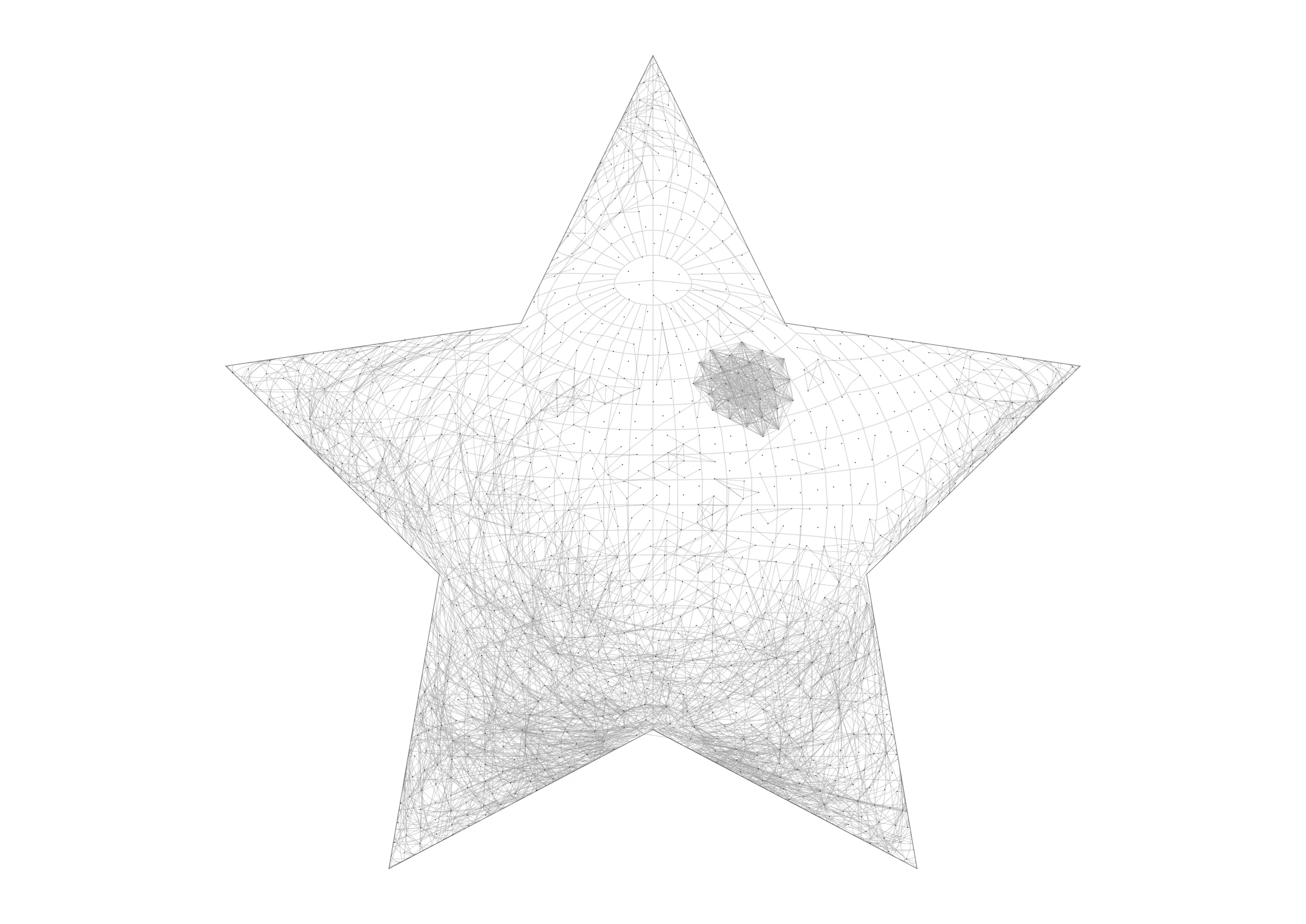
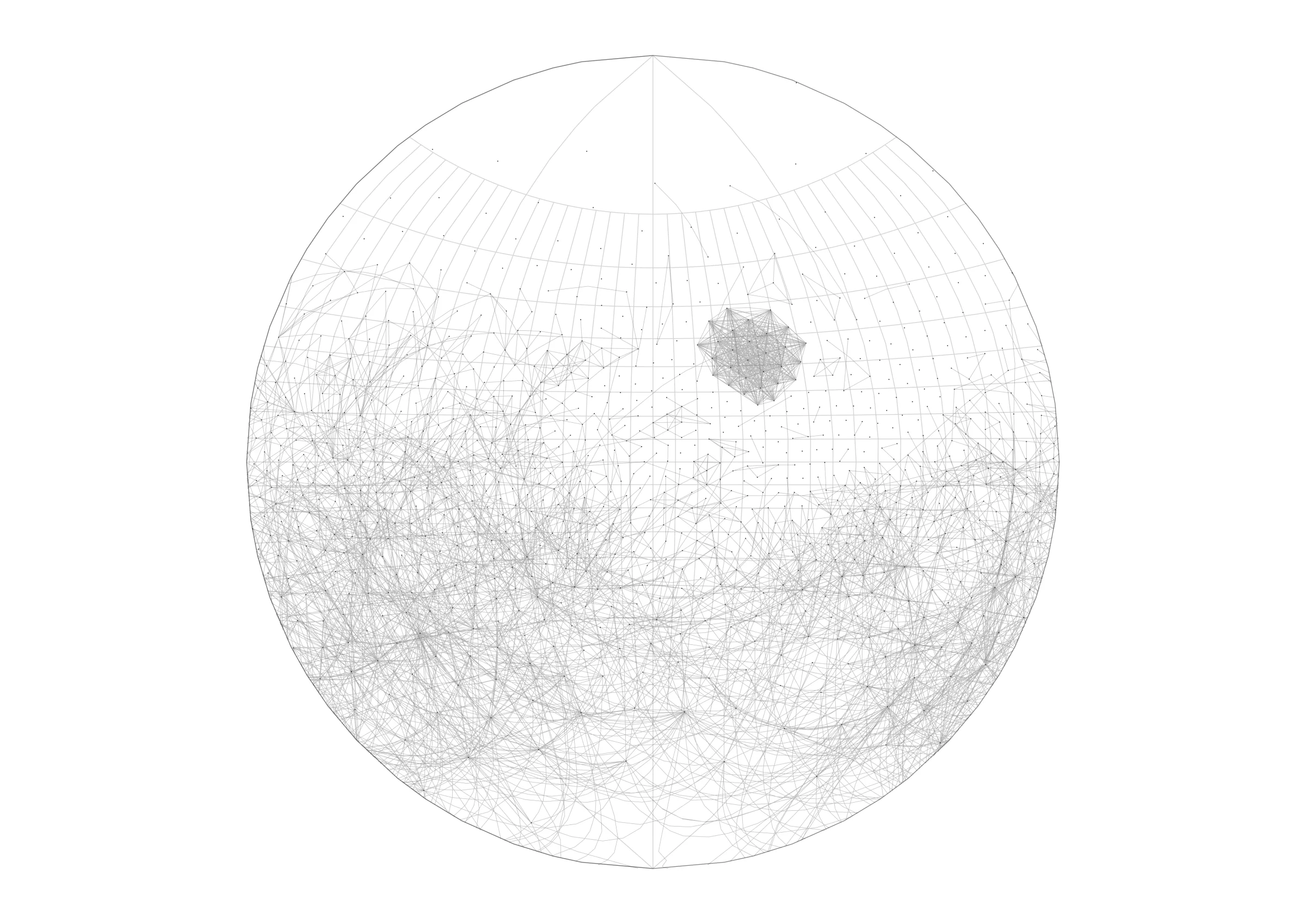
Here is that studio when the organization is a machine, in three moments from the record of the rebuild (Co-work Transcript 2026). It took place in Claude Code, a chat in the terminal, where the machine could read the earlier work and the code repository and test its results in a browser of its own. 1) Refusal. The machine proposes a tidier interface with only 15 projections. The designer asks to keep them all. The machine warns that the list will be hard to read, but the designer holds firm. Completeness matters more than tidiness, a principle the machine could not see because no instruction contained it. 2) Initiative. Asked to patch two vulnerabilities, the machine jumps a whole major version when a small fix would do. Then it reports its own excess, as a junior would. The designer reads the report and lets it stand: delegation allows overreach, as long as it is confessed. 3) Impasse. The machine spends a day’s usage quota checking its own work, tests three fixes, and admits none will help. There is no comfortable answer because none exists, and supervision includes being told no. The machine was free over the means but never over the ends, and the designer judged by three criteria: fidelity to the principle, transparency about deviations, honesty about limits. This is a single case, told by its own author, and it should be read as testimony rather than proof.
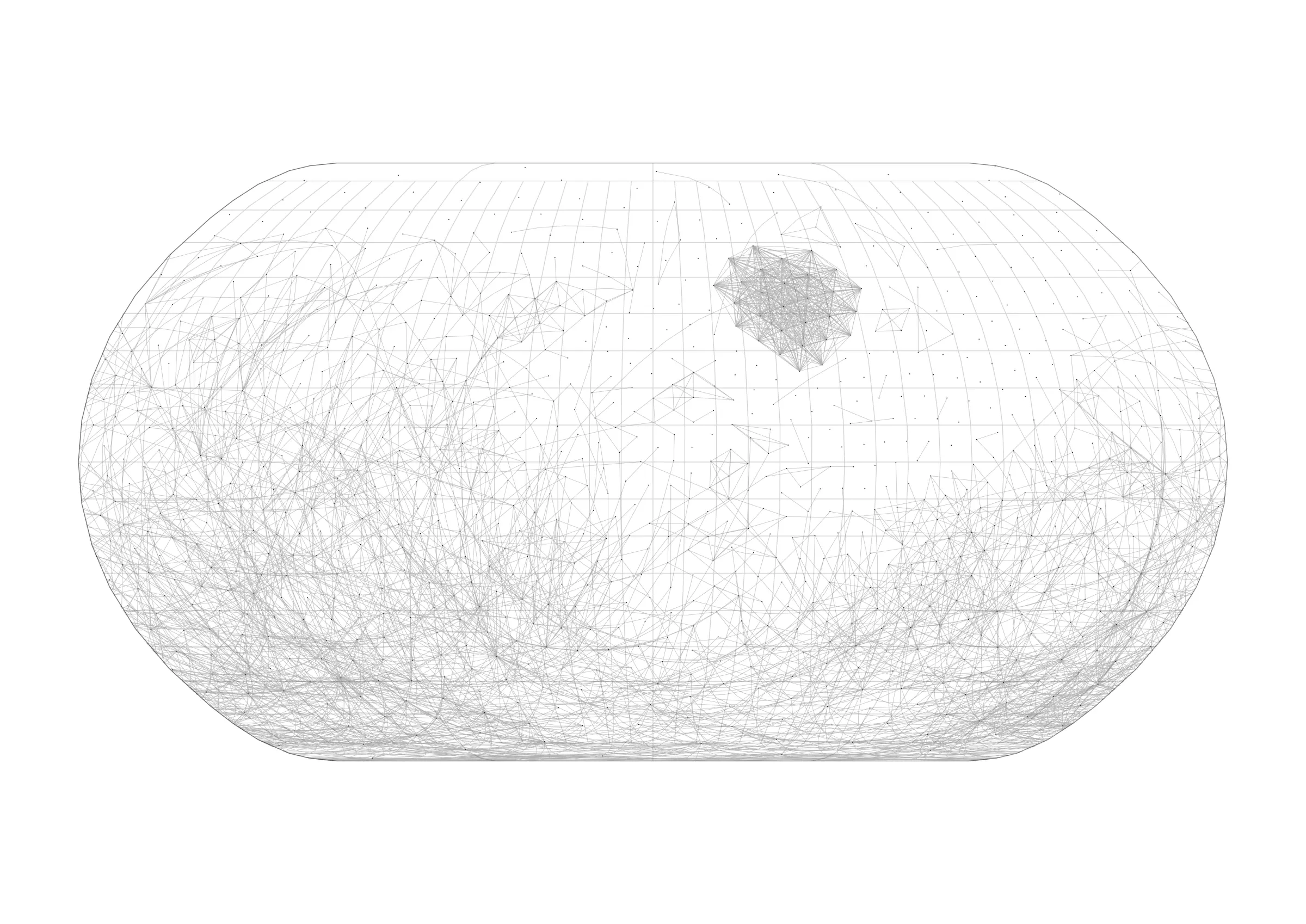
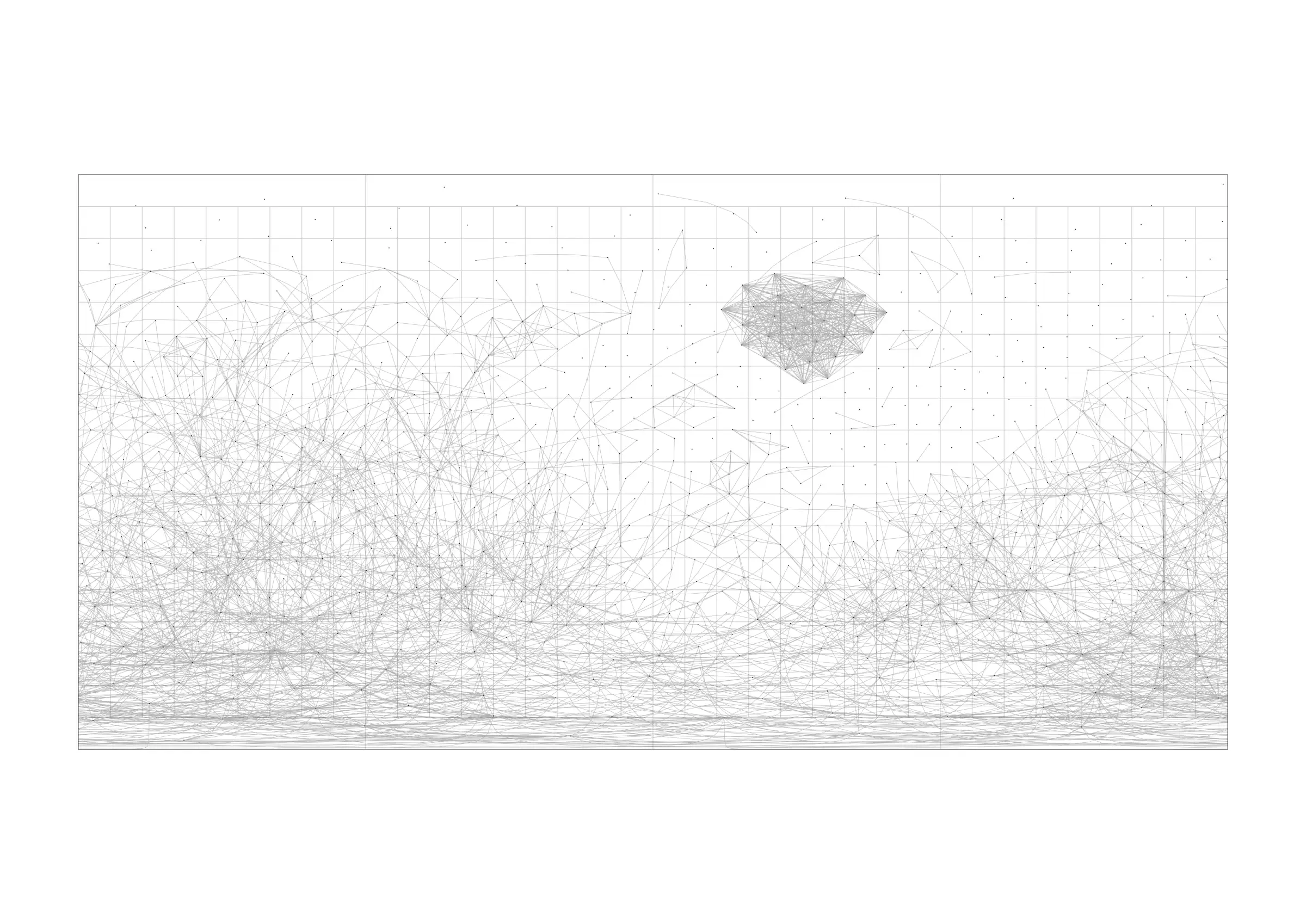
From these three moments the answer follows. When the designer no longer draws, what is left of design is the deciding itself: the judgment that chooses among proposals, the refusal that holds a principle the machine cannot see, the answering-for that no delegation dissolves. The machine did not erase Itten’s distinction between design and form. It made it visible for the first time. As long as one person both conceived and made, the two could pass for a single act; now that they are split between different kinds of minds, we can finally see which was which. Design, it turns out, was always the part that was not the hand. Design without hands has a name: supervision. It is not a smaller authorship but a sharper one, reduced to the one thing that can never be delegated, and exposed for that very reason. Automation erases neither craft nor responsibility: it leaves the designer to answer for what their hands did not make.
References
- Alberti, Leon Battista. (ca. 1452) 1988. On the Art of Building in Ten Books. Translated by Joseph Rykwert, Neil Leach, and Robert Tavernor. Cambridge, MA: MIT Press.
- Bostock, Michael, Vadim Ogievetsky, and Jeffrey Heer. 2011. “D3: Data-Driven Documents.” IEEE Transactions on Visualization and Computer Graphics 17 (12): 2301–9. doi:10.1109/TVCG.2011.185.
- Bourdieu, Pierre. 1993. The Field of Cultural Production: Essays on Art and Literature. Edited by Randal Johnson. New York: Columbia University Press.
- Carpo, Mario. 2011. The Alphabet and the Algorithm. Cambridge, MA: MIT Press.
- Clarke, Alison J. 2021. Victor Papanek: Designer for the Real World. Cambridge, MA: MIT Press.
- Co-work Transcript. 2026. “Spherical Projection.” Unpublished transcript of five AI-assisted working sessions, August 5–6, 2026, extracted from Claude Code session logs. On file with the author.
- Costanza-Chock, Sasha. 2020. Design Justice: Community-Led Practices to Build the Worlds We Need. Cambridge, MA: MIT Press. direct.mit.edu/books/oa-monograph/4605.
- Cuff, Dana. 1991. Architecture: The Story of Practice. Cambridge, MA: MIT Press.
- Dilke, O. A. W. 1987. “The Culmination of Greek Cartography in Ptolemy.” In The History of Cartography, vol. 1, Cartography in Prehistoric, Ancient, and Medieval Europe and the Mediterranean, edited by J. B. Harley and David Woodward, 177–200. Chicago: University of Chicago Press. press.uchicago.edu/books/HOC/HOC_V1/HOC_VOLUME1_chapter11.pdf.
- Itten, Johannes. (1963) 1975. Design and Form: The Basic Course at the Bauhaus and Later. Rev. ed. New York: Van Nostrand Reinhold.
- Lima, Manuel. 2011. Visual Complexity: Mapping Patterns of Information. New York: Princeton Architectural Press.
- Papanek, Victor. (1971) 1985. Design for the Real World: Human Ecology and Social Change. 2nd ed. Chicago: Academy Chicago Publishers.
- Peirce, Charles S. 1879. “A Quincuncial Projection of the Sphere.” American Journal of Mathematics 2 (4): 394–96. doi:10.2307/2369491.
- Rodighiero, Dario. 2020. “Drawing Network Visualizations on a Continuous, Spherical Surface.” In Proceedings of the 24th International Conference Information Visualisation (IV), 573–80. IEEE. doi:10.1109/IV51561.2020.00097.
- ———. 2021. Mapping Affinities: Democratizing Data Visualization. Geneva: Métis Presses. doi:10.37866/0563-99-9.
- ———. 2026a. Spherical Projection. Web application. rodighiero.github.io/spherical-projection.
- ———. 2026b. Spherical Projection. Computer software. GitHub. github.com/rodighiero/spherical-projection.