Liveable Futures: A Guiding Concept for Knowledge Infrastructures
Beaulieu, Anne, Efe Cengiz, Raul Cordero Carrasco, Selen Eren, Sarah Feron, Matilde Ficozzi, Carol Garzon Lopez, Stephanie Hobbis, Ruth Howison, Clarisse Kraamwinkel, Maarten Loonen, Marije Miedema, and Dario Rodighiero. 2024. “Liveable Futures: A Guiding Concept for Knowledge Infrastructures.” EASST Review 43 (1): 43–54. https://easst.net/easst-review/43-1/liveable-futures-a-guiding-concept-for-knowledge-infrastructures/.
Livable futures bring into question the conditions that make human and more-than-human lives possible, and that provide these with prospects. This collectively written article proposes “livable futures” as a guiding concept for knowledge infrastructures, which by creating and recreating objects, categories and relations shape what forms of life become intelligible and what forms remain precarious. The authors examine why two dominant labels fall short: sustainability, too closely tied to development and growth to orient action beyond the preservation of vested interests, and the Anthropocene, whose epochal scale lumps humanity into a single actor and places agency out of reach. Against both, livability is offered as a humbler and more accessible starting point, one that invites the question “what is a livable future for you, with others?” rather than “what to do about the Anthropocene?”
Livable futures1 bring into question the conditions that make human and more-than-human lives possible and provide these with prospects. Such futures are made of multiple elements, including knowledge infrastructures (KIs). Knowledge infrastructures, by creating and recreating objects, categories and relations, make important contributions to frameworks that make some forms of life intelligible, and other forms of life precarious. It is in this sense that in much of our work, we seek to articulate how KIs can contribute to livable futures.
Because livable futures are very much a project that is to be achieved in practice, the phrase is also at the core of engagement activities of the Knowledge Infrastructures Department and of the faculty of Campus Fryslân at the University of Groningen (The Netherlands), where we have launched an annual Liveable Futures Festival and a book series with Amsterdam University Press. The festival and series engage different colleagues and publics and constitute occasions to further reflect on and develop this concept through interaction with a diversity of stakeholders. Livable futures help articulate what is non-negotiable for survival and what makes life worth living. It opens up a space to share different needs and different matters of care. In our experience so far, it supports interactions about the kinds of “present” in which lives are lived and how these might continue (or not) in the future—and it does so in ways that are more generative than discussions framed by catastrophist or utopian narratives.
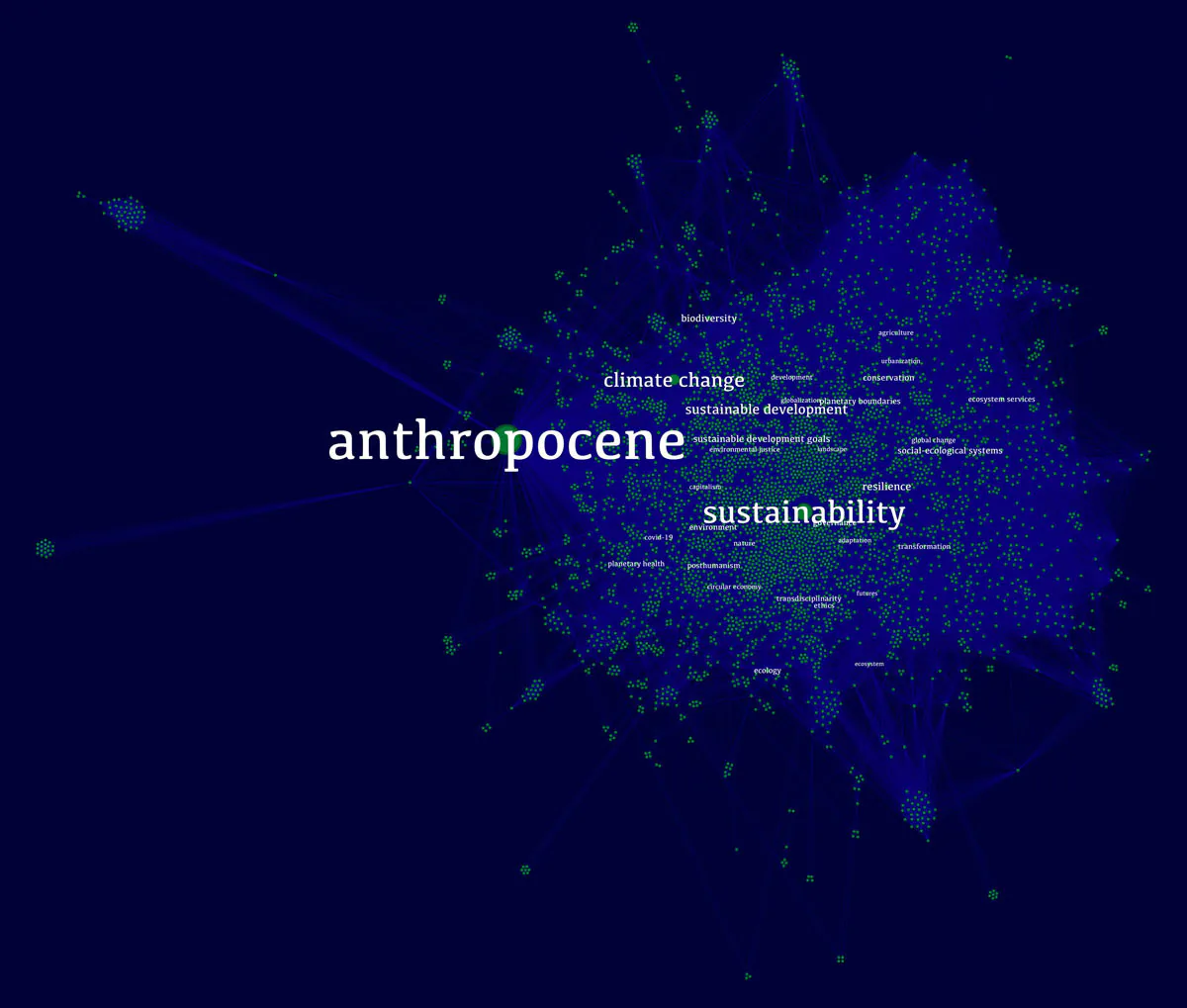
By collectively writing about livable futures, we, the authors, have consolidated our understanding of the term and identified aspects where our emphasis varies—both equally important negotiations. We have also shared how the phrase has a different valence, resonating with some of the other languages in which we work (futuro vivibile, avenir vivable). And we have debated whether the variability in the term livable is politically risky, as it potentially builds in too much room for maneuver. By sharing the phrase with the EASST Review readership, we hope to stimulate further interaction and engagement with the project to which we are committed: building knowledge infrastructures that can support the knowledge urgently needed for livable futures. Other terms such as sustainability or Anthropocene are the most common labels to orient action toward improving conditions and conveying a sense of crisis. Before introducing livable futures, we first take a look at how these two terms work, and consider why a new label really is necessary.
Is Sustainability More of the Same?
The term sustainability has traveled across different fields over the past 50 years, to become a very prominent term in everyday parlance and a ubiquitous qualifier to a wide range of activities, institutions, goods and services.
As it is most frequently defined, sustainability is about continuing and lasting prosperity, and reliance on environmental resources to achieve this prosperity. It is a contested concept (Washington 2015), and is strongly associated with preservation of vested interests rather than transformation of exploitative systems. Part of this negative connotation has to do with the close association of sustainability with “sustainable development” which is in turn connected to economic growth. Sustainability, in the context of development, does not convey the urgency of the current problems nor the need to do much more than sustaining current conditions. This stance that reinforces the status quo is visible in the well-known Brundtland (1987) report (WCED, p. 37):
Sustainable development is development that meets the needs of the present without compromising the ability of future generations to meet their own needs.
Implied in this definition is a highly uneven burden, with regards to sustainability. It stresses that further development is what must be achieved sustainably, thereby leaving developed countries and their structural unsustainability out of the picture. Some years later, a very similar elision would be made extremely clear through the intervention of Agarwal and Narain (1991), demanding distinction between essential and luxury emissions as a necessary step toward equity in addressing climate change. In other words, a focus on sustainable development has served to curtail cumulative responsibilities of developed countries—tainting sustainability as a framing concept.
Furthermore, most writing on sustainable development assumes, implicitly or explicitly, that economic growth is the key to development (Washington 2015). The centrality of economic growth therefore aligns much sustainability discourse to neo-liberal modes of social organization and extractive relations to the environment-as-resource. Both sustainability and sustainable development originally thrived at the intersection of ecology and political discourse, but have increasingly been taken up by business, where it is “associated with efficiency, profitability and even growth” (Vasseur and Baker 2021). The term green growth is a related label that attempts to reconcile the impossibility of continued growth based on exploitation of finite planetary resources (Wijkman and Rockström 2012), the starting point to well-known work on donut economics (Raworth 2017).
While some remain optimistic about the possibility of decoupling the term sustainability from sustainable development and growth (Washington 2015), the concept of sustainability is too closely connected to resource thinking, an approach that sees nature and the material world as assets to be exploited (Turnhout 2024). It relies on the colonization of nature (Banerjee 2003), and comes from a tradition that distinguishes, disconnects and often opposes natures and humans, reserving agency exclusively for the latter, as critiqued by Haraway (1991, p. 198):
Nature is only the raw material of culture, appropriated, preserved, enslaved, exalted or otherwise made flexible for disposal by culture in the logic of capitalist colonialism.
The interdependence of culture and nature, of society and the environment needs to be emphasized, as does the move away from the (post-hoc) distinctions and binaries of modernity, in order to understand highly situated, unequal access to “resources” and need for radical action (Haraway 2015).
Sustainability is therefore problematic in a number of ways. First, in the way it orients to action. If sustainability calls for change, then it is only as a breaking force to slow down the scope of exploitation today, to ensure exploitation in the future. Second, it foregrounds an economic logic, for example in the articulation of sustainability as the achievement of a balance between the distinct elements of environment, society and the economy (sometimes expressed with the shorthand “people, planet, profit”). This is objectionable because they set economics apart, as though it were not part of society (Smythe 2014), and as though economics is confined to industrial-capitalist practices and values (Gibson-Graham 1996). Finally, and most fundamentally, it obfuscates that currently (and even arguably in the 80s), the differentiated consumption patterns across the planet amount to overshooting of the earth’s resources (see https://data.footprintnetwork.org/#/)—a situation that calls for transforming, not sustaining.
Who Actually Lives in the Anthropocene?
A second dominant term, the Anthropocene, is the “scientific proposal that the Earth has entered a new epoch as a result of human activity” (Lorimer 2017, p. 117). In contrast to sustainability discourse, it does foreground the interaction rather than the distinction of the social and the natural. It signals, by its evocation of an epochal shift, the scope and gravity of current crises. It is also a term that has currency across different constituencies, thereby providing a common banner under which to unite (Hastrup, Münster, Tsing, and Bubandt 2022). It is furthermore a way to highlight the evidence for disruption at the scale of Earth systems through (human) industrial and colonial activity. However, the term is also criticized along different axes. Its anthropocentrism is blatant (Brannen 2019), that is to say, the way it centers Anthropos as the deeply problematic category of “human” and the system of exclusions on which the concept relies (Yusoff 2018). By insisting on Anthropos as a uniting label, in its lumping of all of humanity into a single actor, Anthropocene evacuates huge differences in the relation, responsibility and vulnerability of those who might be subsumed to this all-encompassing Anthropos (Chakrabarty 2015; Haraway 2015; Todd and Davis 2017), and in so doing fails to acknowledge the ontological and epistemological diversity in human-nature relations (Descola 2013; Vilaca 2016). As a diagnostic label, Anthropocene erases crucial distinctions and reveals a “global” problem at a scale where action and agency are hard to imagine. It can only be embraced via highly complex mechanisms of abstraction, of which the IPCC reports are emblematic. The epochal scale also foregrounds the unprecedented status of the current crisis, highlighting universal human frailty and obscuring how forms of power are maintained, even as solutions are articulated (Whyte 2020).
A starting point that lowers the threshold for action is needed, a more accessible, humble future that recognizes the importance and value of everyday mundaneness. Our proposal is therefore to use “livable futures”. To provide a better invitation: “what is a livable future for you, with others?” instead of “what to do about the Anthropocene?”
Futures…
The proposal for a label of “livable futures” as a banner under which to galvanize imagination and care as key forms of action therefore aims to avoid some of the pitfalls in the terminology of sustainability and Anthropocene. The components livable and future work together to evoke both possibility and need for action.
The term future emphasizes that there are prospects, it stresses the indeterminacy of what is to come and the possibility to “probe, interrogate and play with futures that are plural, non-linear, cyclical, implausible and always unravelling” (Salazar, Pink, Irving, and Sjöberg 2017, p. 2). The term future serves as a necessary reminder of the increasingly frequent implementation of algorithmic shutting down of the future through predictive reliance on past data (Beaulieu and Leonelli 2021), or through discourses of inevitable futures (Schiølin 2020). Conversely, much of techno-science is oriented to the future and especially toward an idealized “future perfect” based on “hopes that… current hardship will have been the necessary precursor to future prosperity” (Hetherington 2016, p. 42). It is clear that the future plays an important role in constituting the present (Brown and Michaels 2003).
There is also nothing grandiose about “livable futures”, it is rather something mundane than heroic. We consider these to be advantages, because they do not evoke emergencies and crises. The framing of current situations as emergencies and crises is predominantly intended to spur action—understandably, these are worrying times. But the invocation of emergency (Murphy 2018; Papadopoulos, Bellacasa and Tacchetti 2023; Whyte 2020) can be used to create hierarchies of values, subsuming justice, reciprocity, care and deliberation.
Change over time can be understood through the ability to remember a past and project a future (Conty 2018). Instead, such epistemologies of crisis also focus on a present that is unlike any past, hence precluding the use of lessons learned from the past (Whyte 2020).
Against this tendency, livability, in its humble everydayness, is meant to be a reminder that relations of all kinds exist, may need repairing, and certainly require care. Finally, in our phrase livable futures, these futures are plural, insisting on plurality, both in terms of outcomes and of experience. When the very possibility of the future is put into question, this triggers a defensive stance that is neither creative nor hopeful and it reinforces the notion that “nature” or “the environment” are hostile, as Amin (2013) implies (as cited in Barua 2021, p. 1481):
Resilience infrastructures are part and parcel of emerging forms of neoliberal biopolitics that is “catastrophist”, one where “the future is increasingly being cast as unpredictable and dangerous” and where “preparedness” becomes the watchword.
Furthermore, there may be a great diversity in experiences of the futures to come, a possibility that again, is shut down by crisis thinking that funnels efforts into saving the current state of affairs and may “obscure how everyone one else may experience today’s world” (Whyte 2020, p. 62). The plural form emphasizes multiple experiences and works as a reminder that the task is not to find the best possible future, but rather to open up space for different ways of achieving livability in different forms, adapted to rich localities.
…That Are Livable
If the future is open, it is accompanied by “livable”, as a normative qualifier. Livable futures are scenarios in which the possibility of livability is envisioned. Livable futures are neither objects nor certainties, but sets of conditions that can refer to situations good enough to live properly, to describe a desirable and enjoyable future, or to describe the minimum needed for survival. This may be different across forms of life; as Mette Nordhal Svendsen notes in her analysis of the dynamics of imagined futures, a key question is what is assumed to be the “common good” (Groth-Jensen, Svendsen, and Snell 2023). Livable can therefore have a range of connotations, spanning endurable, survivable, suitable for living in, inhabitable, agreeable, among other common meanings. Such a sliding scale seems appropriate for these uncertain times. The term livable futures indicates that the possibility of survival—and therefore also the possibility of NOT living on—has to be taken into careful account. While livability has been turned into an indicator2, livable futures is neither a measurable object (like growth), nor a certainty, nor an assessment (like sustainability), but a situation to live in. Such a sliding scale might be risky: it provides room to maneuver for different agendas, and might seem to lack the strength of a clear goal. However, clear goals can only be reached in the context of strong relations of accountability, of commitment. Livable futures stress the conditions in which these relations thrive, so that negotiations and commitments to livability can emerge.
Liveable, especially in the British spelling, has a conspicuous suffix. The particle -able has the meaning of “capable of”. Livable therefore invokes the capability for living. Capability for life is not a feature of the organism, but of the organism in interaction with its context. For Butler (2010), livable is important to “move away from a focus on individualism and the protection of life in and of itself and directs attention to the conditions which maintain life, which either enhance or reduce its precariousness in a particular location at a particular time” (McNeilly 2016). For Butler (2010), livability is undergirded by the conditions that ensure physical persistence and conditions of “social intelligibility”, the possibility of living a life that counts, that is meaningful.3 Conversely, frameworks (racism, sexism) that increase precarity of certain lives by making them unintelligible (McNeilly 2016), such as those of migrant or transgender persons, decrease the livability of certain lives, rendering them “wasted” because of their perceived “uselessness” for economic (industrial-capitalist) progress (Bauman 2003).
While Butler has elaborated the term livable as an important criterion for human life (Butler 2010), we propose to extend it to all forms of life to avoid falling in the anthropo-centric trap that also surrounds the Anthropocene. Instead we embrace the challenge of formulating what a livable life for an insect or microbe or mushroom might be as important and generative of better living-with non-humans in a multispecies planetary environment. While precarity—that which threatens livability—is defined by Butler (2010) as “politically induced condition in which certain populations suffer from failing social and economic networks of support and become differentially exposed to injury, violence, and death” (p. 25), precarity can also be environmentally induced and experienced, affecting non-humans.
Whether the plurality of “livable” is potentially also a weakness is the object of debate—also among the authors. On the one hand, “livable” can be co-opted into dominant, often neoliberal discourses. Perceptions of how to classify “livable” can be diverse, and may even contradict each other. Debates about “invasive species” are indicative of such a potential tension, valuing the movement and presence of some species, while others are threatened, often following global hierarchies and colonial flows (Cottyn, Devliege, and Cahn 2023; Kirbis 2020). Disagreements about the creation of “livable” environments are also central to broader conservation discourses, which often sideline, actively exclude, and at times forcibly relocate and actively devalue some (human) lives over those of others, as exemplified in global critiques of indigenous hunting practices (Hobbis, Soete, and Hobbis 2024) or the Half Earth vision for conservation (Büscher, Fletcher, and Brockington 2017). On the other hand, this plurality and conceptual openness of “livable” opens up a space for interaction about “livable futures,” one that has the capacity to account for human and planetary diversity, including the inequalities and systems of exploitation that have, so far, shaped too much of the past, present and visions for the future. The phrase “livable futures” signals an ethically and politically normative aspiration. It serves to express the need of dealing with serious problems to ensure futures and stresses that much is at stake—a humble aspiration toward the possibility of life that has to be developed in caring interaction, with awareness of trade-offs.
References
- Agarwal, A., and S. Narain. 1991. Global Warming in an Unequal World. New Delhi: Centre for Science and Environment.
- Banerjee, S. B. 2003. “Who Sustains Whose Development? Sustainable Development and the Reinvention of Nature.” Organization Studies 24 (1): 143–80. doi:10.1177/0170840603024001341.
- Barua, M. 2021. “Infrastructure and Non-Human Life: A Wider Ontology.” Progress in Human Geography 45 (6): 1467–89. doi:10.1177/0309132521991220.
- Bauman, Z. 2003. Wasted Lives: Modernity and Its Outcasts. Cambridge: Polity.
- Beaulieu, A., and S. Leonelli. 2021. Data and Society: A Critical Introduction. London: SAGE Publications Ltd.
- Brannen, P. 2019. “The Anthropocene Is a Joke.” The Atlantic, August 13, 2019. https://www.theatlantic.com/science/archive/2019/08/arrogance-anthropocene/59579/
- Brown, N., and M. Michaels. 2003. “A Sociology of Expectations: Retrospecting Prospects and Prospecting Retrospects.” Technology Analysis & Strategic Management 15 (1): 3–18.
- Butler, J. 2010. Frames of War: When Is Life Grievable? Reprint edition. London: Verso.
- Büscher, B., R. Fletcher, and D. Brockington. 2017. “Half-Earth or Whole Earth? Radical Ideas for Conservation, and Their Implications.” Oryx 51 (3): 407–10.
- Chakrabarty, D. 2015. “The Human Condition in the Anthropocene.” The Tanner Lectures in Human Values, Yale University. https://tannerlectures.utah.edu/_resources/documents/a-to-z/c/Chakrabarty%20manuscript.pdf
- Conty, A. F. 2018. “The Politics of Nature: New Materialist Responses to the Anthropocene.” Theory, Culture & Society 35 (7–8): 73–96. doi:10.1177/0263276418802891.
- Cottyn, H., L. Devliege, and L. Cahn. 2023. “Life Out of Place: Revisiting Species Invasions. Introduction to the Special Issue.” Anthropocenes – Human, Inhuman, Posthuman 4 (1): 1. doi:10.16997/ahip.1433.
- Descola, P. 2013. Beyond Nature and Culture. Chicago: University of Chicago Press.
- Gibson-Graham, J. K. 1996. The End of Capitalism (As We Knew It): A Feminist Critique of Political Economy. Minneapolis: University of Minnesota Press.
- Global Liveability Index. 2022. https://pages.eiu.com/rs/753-RIQ-438/images/liveability-index-2022.pdf (archived) (accessed April 29, 2024).
- Groth-Jensen, L., M. N. Svendsen, and K. Snell. 2023. “Strategies on Personalized Medicine and the Power of the Imagined Public.” New Genetics and Society 42 (1): e2260939. doi:10.1080/14636778.2023.2260939.
- Haraway, D. 1991. Simians, Cyborgs and Women: The Reinvention of Nature. New York: Routledge.
- Haraway, D. 2015. “Anthropocene, Capitalocene, Plantationocene, Chthulucene: Making Kin.” Environmental Humanities 6 (1): 159–65. doi:10.1215/22011919-3615934.
- Hastrup, K., U. Münster, A. Tsing, and N. Bubandt. 2022. “Afterword. Troubling Methods in the Anthropocene: A Roundtable Discussion.” In Rubber Boots Methods for the Anthropocene: Doing Fieldwork in Multispecies Worlds, edited by N. Bubandt, A. Oberbeck Andersen, and R. Cypher, 371–410. Minneapolis: University of Minnesota Press.
- Hetherington, K. 2016. “Surveying the Future Perfect: Anthropology, Development and the Promise of Infrastructure.” In Infrastructures and Social Complexity: A Companion, edited by P. Harvey, C. Bruun Jensen, and A. Morita, 40–50. London: Routledge.
- Hobbis, S., A. Soete, and G. Hobbis. 2024. “Platformizing the Hunt for Dolphins: Beyond Industrial-Capitalist Encounters with Nature 2.0.” Geoforum 149: 1–9.
- Kirbis, A. 2020. “Off-Centering Empire in the Anthropocene: Towards Multispecies Intimacies and Nonhuman Agents of Survival.” Cultural Studies 34 (5): 831–50.
- Lorimer, J. 2017. “The Anthropo-Scene: A Guide for the Perplexed.” Social Studies of Science 47 (1): 117–42. doi:10.1177/0306312716671039.
- McNeilly, K. 2016. “Livability: Notes on the Thought of Judith Butler.” Critical Legal Thinking Blog, May 26, 2016. https://criticallegalthinking.com/2016/05/26/livability-judith-butler/ (accessed April 29, 2024).
- Murphy, M. 2018. “Against Population, Toward Afterlife.” In Making Kin, Not Population, edited by A. E. Clarke and D. J. Haraway, 102–24. Chicago: Prickly Paradigm Press.
- Papadopoulos, D., M. Puig de la Bellacasa, and M. Tacchetti, eds. 2023. “Introduction: No Justice, No Ecological Peace: The Groundings of Ecological Reparation.” In Ecological Reparation, 1–16. Bristol: Bristol University Press. https://bristoluniversitypressdigital.com/display/book/9781529216073/int001.xml (archived)
- Raworth, K. 2017. Doughnut Economics. Vermont: Chelsea Green Publishing.
- Salazar, J. F., S. Pink, A. Irving, and J. Sjöberg, eds. 2017. Anthropologies and Futures: Researching Emerging and Uncertain Worlds. London: Bloomsbury.
- Schiølin, K. 2020. “Revolutionary Dreams: Future Essentialism and the Sociotechnical Imaginary of the Fourth Industrial Revolution in Denmark.” Social Studies of Science 50 (4): 542–66. doi:10.1177/0306312719867768.
- Smythe, K. R. 2014. “An Historian’s Critique of Sustainability.” Culture Unbound 6 (5): 913–29. doi:10.3384/cu.2000.1525.146913.
- Todd, Z., and H. Davis. 2017. “On the Importance of a Date, or, Decolonizing the Anthropocene.” ACME: An International Journal for Critical Geographies 16 (4): 761–80.
- Turnhout, E. 2024. “A Better Knowledge Is Possible: Transforming Environmental Science for Justice and Pluralism.” Environmental Science & Policy 155 (May): 103729. doi:10.1016/j.envsci.2024.103729.
- Vasseur, L., and J. Baker. 2021. “What Is Sustainability?” Brock University Blog, October 10, 2021. https://brocku.ca/unesco-chair/2021/10/10/what-is-sustainability/
- Victor, D. 2016. “Why ‘All Lives Matter’ Is Such a Perilous Phrase.” The New York Times, July 15, 2016. https://www.nytimes.com/2016/07/16/us/all-lives-matter-black-lives-matter.html
- Vilaca, A. 2016. Praying and Preying: Christianity in Indigenous Amazonia. Berkeley: University of California Press.
- Washington, H. 2015. “Is ‘Sustainability’ the Same as ‘Sustainable Development’?” In Sustainability, edited by H. Kopnina and E. Shoreman-Ouimet. London: Routledge.
- Whyte, K. P. 2020. “Against Crisis Epistemology.” In Handbook of Critical Indigenous Studies, edited by A. Hokowhitu, L. Moreton-Robinson, S. Larkin, and C. Andersen, 52–64. London: Routledge.
- Wijkman, A., and J. Rockström. 2012. Bankrupting Nature: Denying Our Planetary Boundaries. London: Routledge.
- World Commission on Environment and Development (WCED). 1987. Our Common Future. Brundtland Report. Oxford: Oxford University Press. https://www.are.admin.ch/are/en/home/medien-und-publikationen/publikationen/nachhaltige-entwicklung/brundtland-report.html (archived) (accessed April 29, 2024).
- Yusoff, K. 2018. A Billion Black Anthropocenes or None. Minneapolis: University of Minnesota Press.
-
As a phrase, we have come across “livable futures” in some urban planning contexts, which stresses its relevance to everyday life. ↩
-
The Economist Intelligence Unit has a liveability index of cities: “The concept of liveability is simple: it assesses which locations around the world provide the best or the worst living conditions. Assessing liveability has a broad range of uses, from benchmarking perceptions of development levels to assigning a hardship allowance as part of expatriate relocation packages. Our liveability rating quantifies the challenges that might be presented to an individual’s lifestyle in any given location and allows for direct comparison between locations” (Global Liveability Index 2022). ↩
-
See discussion of phrase “all lives matter” and of Butler’s position in Victor (2016). ↩